Source
Adapted from my own handwritten and hand-typed notes from Year 1 to Year 3 of my EEE degree
The common-emitter (C-E) amplifier takes the input at the base and the output at the collector. It is the BJT inverting amplifier with high voltage gain.
AC Equivalent
With all capacitors shorted and at AC ground, and the collector sees .
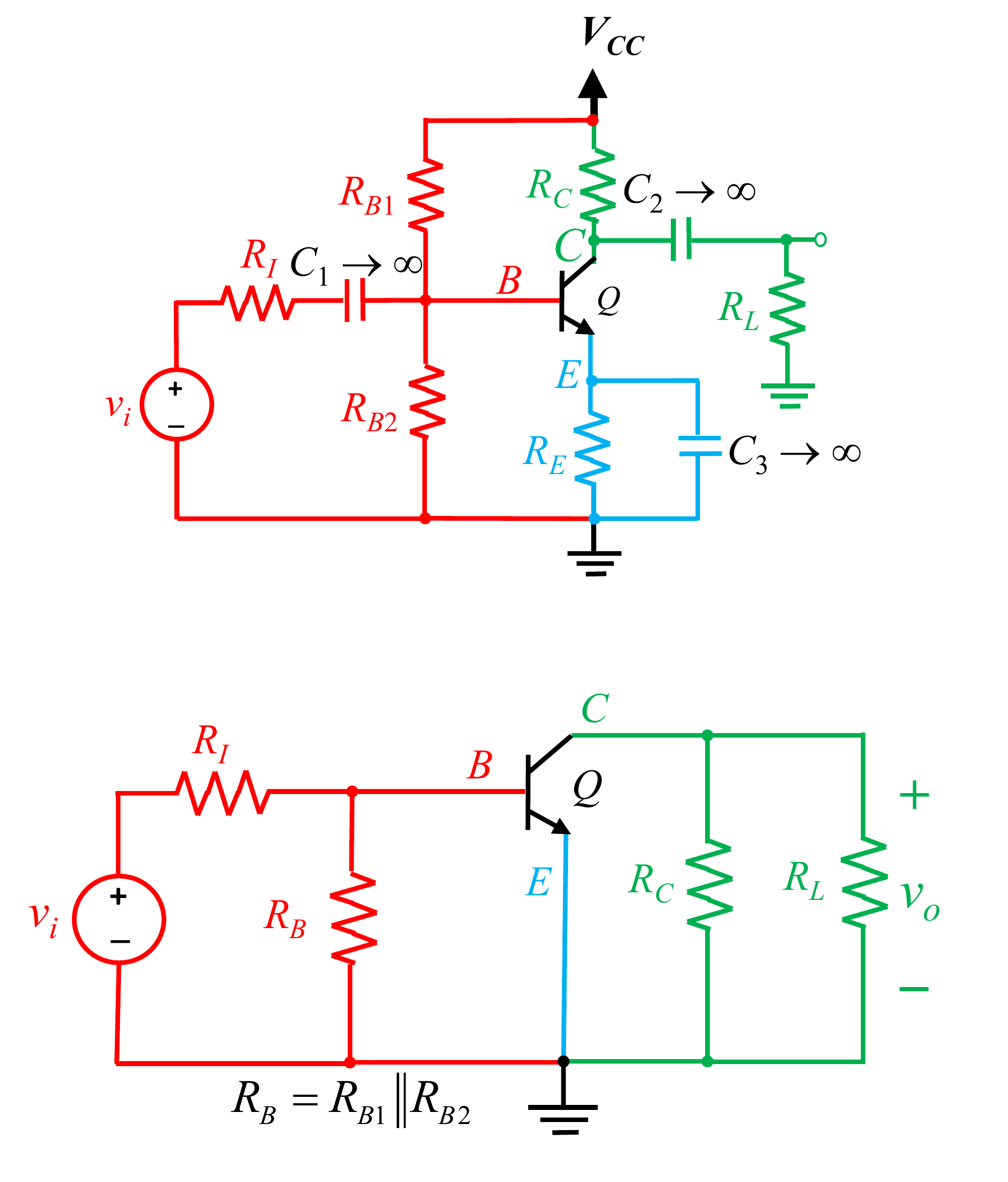
Fully Bypassed Emitter
The emitter is at AC ground. With :
Unbypassed Emitter Resistor
Only is bypassed and stays in the AC circuit. Ignoring the small current in , :
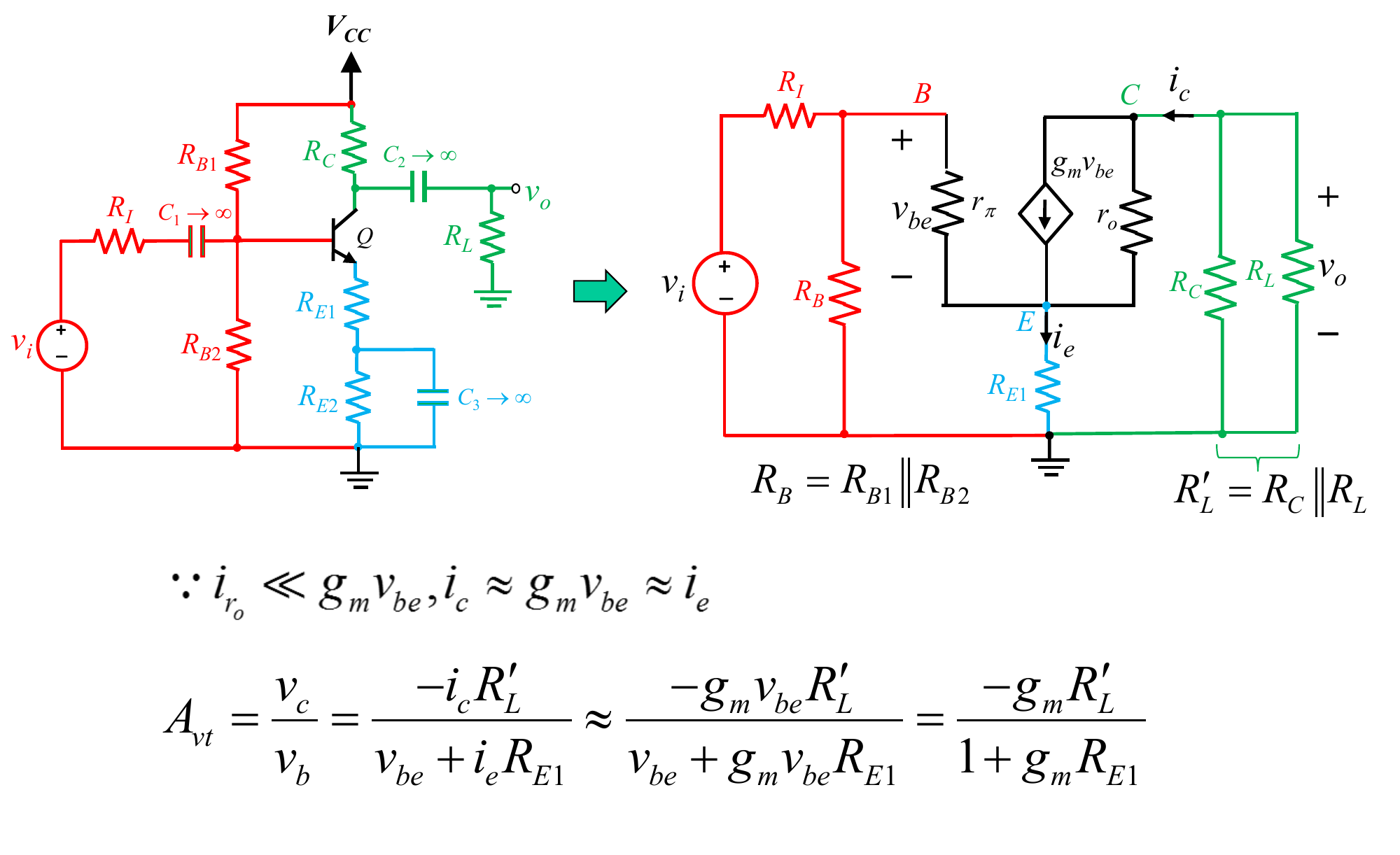
Trade-off of :
- gain drops by but becomes set by resistor ratios, not by
- input resistance rises by about
- the allowed input amplitude rises by the same factor
Worked Example
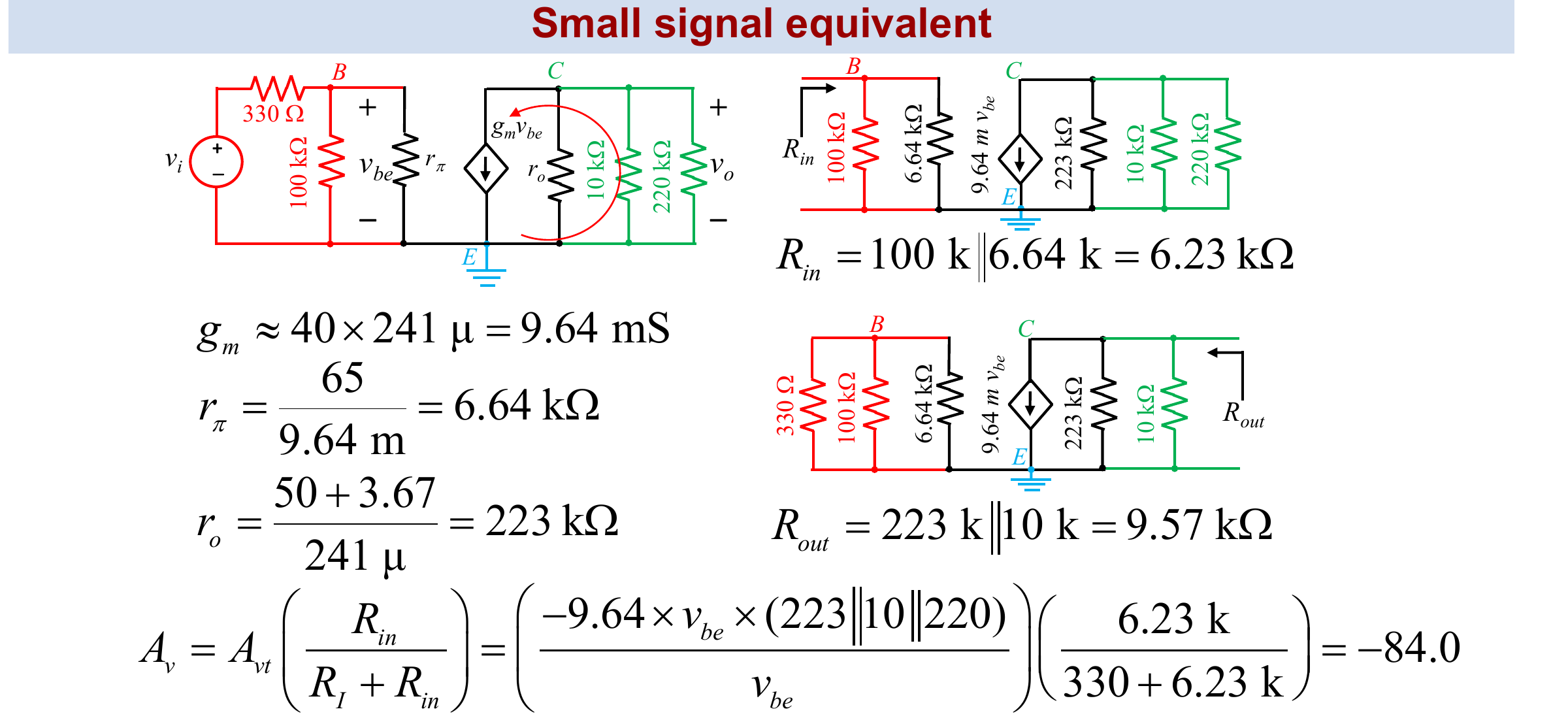
, V, V supplies, kΩ, kΩ, kΩ (bypassed), Ω, kΩ.
DC: gives µA, µA, V.
AC:
- mS, kΩ, kΩ
- kΩ
- kΩ
How the C-E compares with the other configurations is summarised in Single-Stage Amplifier Families.