Source
Adapted from my own handwritten and hand-typed notes from Year 1 to Year 3 of my EEE degree
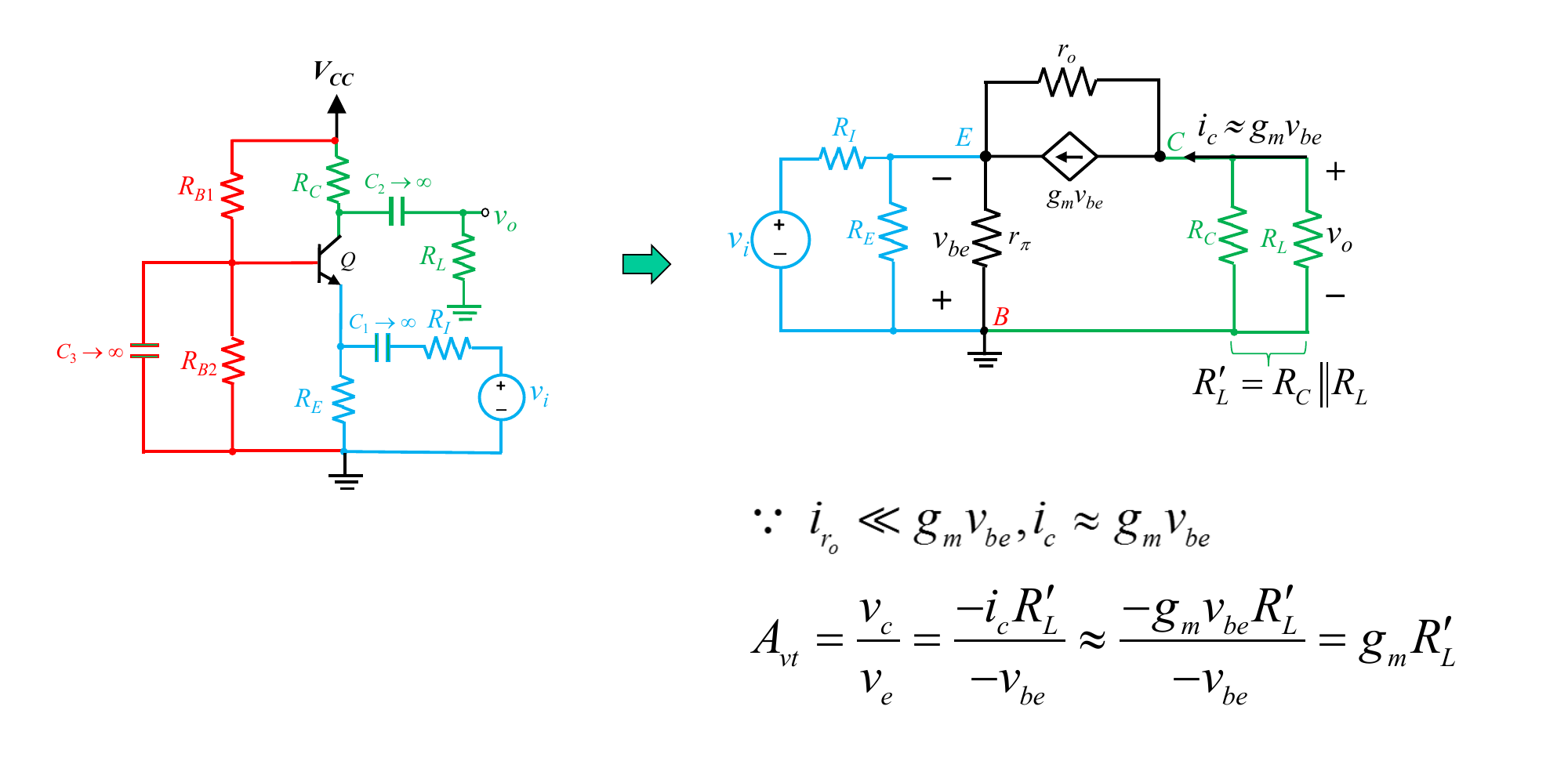
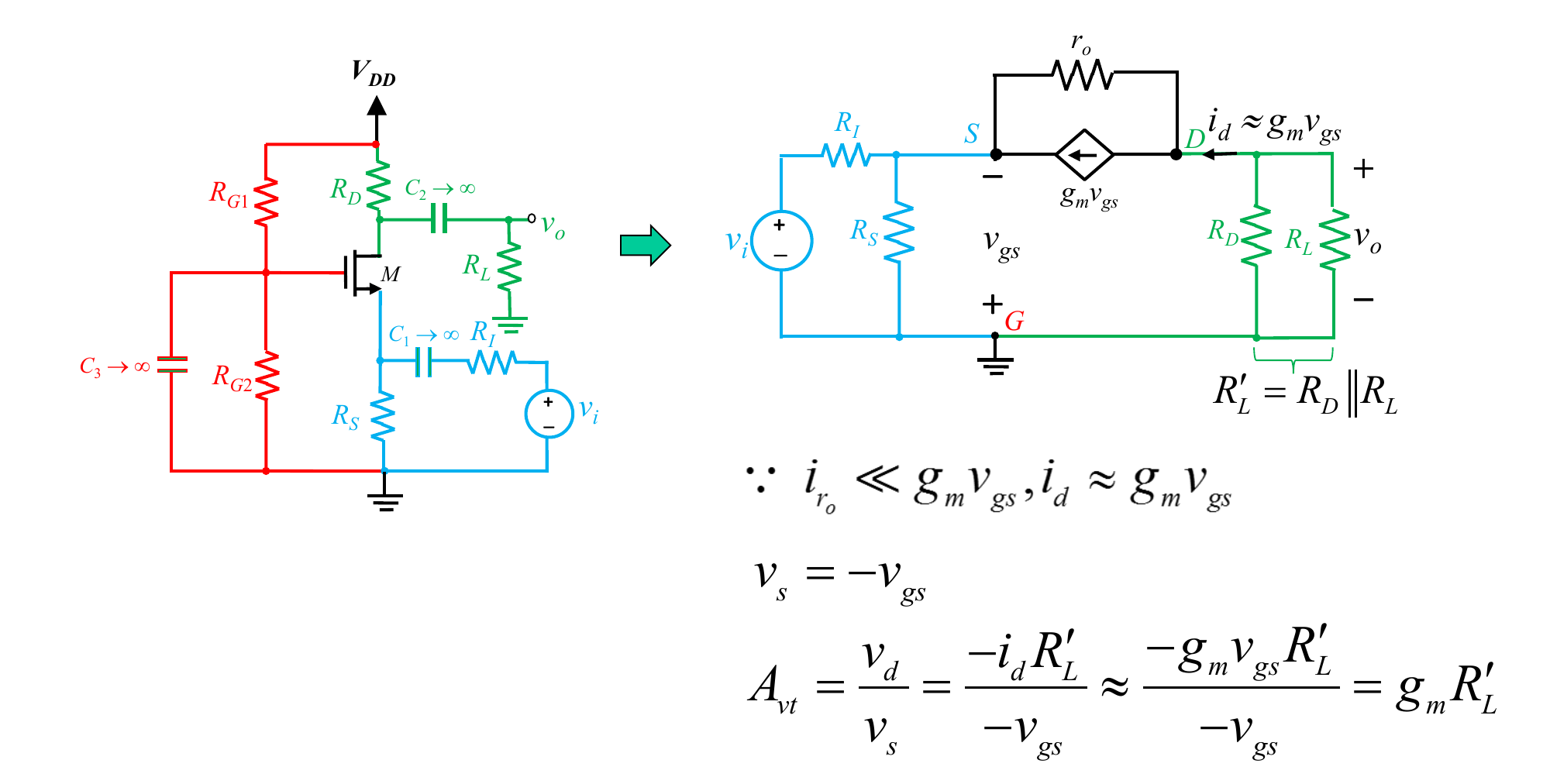
The common-base (C-B) and common-gate (C-G) amplifiers take the input at the emitter or source and the output at the collector or drain. The base or gate is held at AC ground by a bypass capacitor. They are non-inverting and have a very low input resistance.
C-B Amplifier
With and :
Input resistance looking into the emitter (current in ignored):
Output resistance, with :
C-G Amplifier
With and :
Overall Gain and the Input Divider
Because is only about , a source resistance of similar size wastes most of the signal. The configuration suits sources that look like current sources (high is fine for current gain) and gives a very high output resistance.
Quick Example
C-B with mS, kΩ, , Ω: , Ω, so .
All three families are compared in Single-Stage Amplifier Families.