Introduction
The Equivalent Uniform Annual Cost (EUAC) method changes all present and future cash flows into one equal yearly cash flow over the life of the project. Unlike the Payback Method, it includes the time value of money.
Time value of money
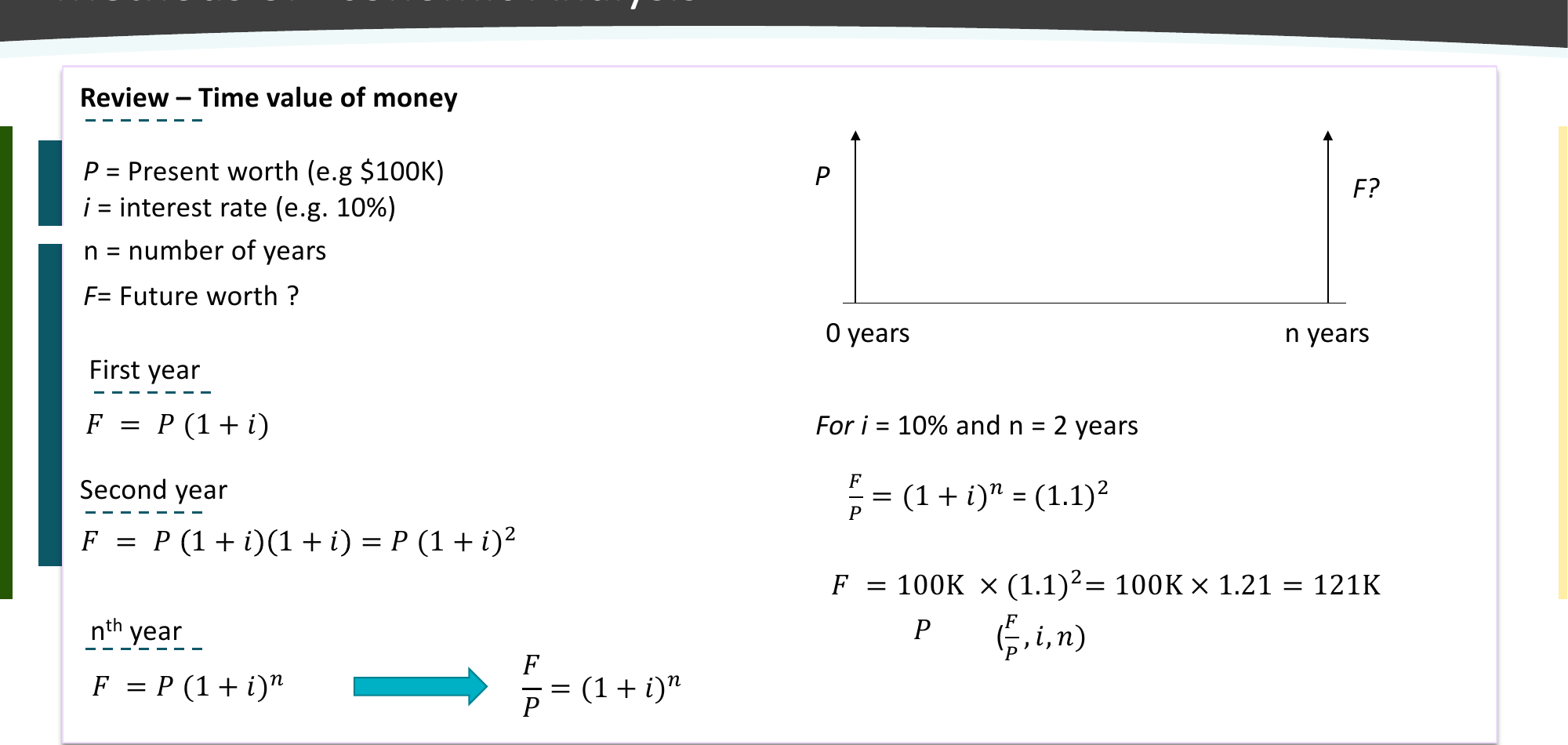
Money today is worth more than the same money in the future, because it can earn interest.
- is the present worth
- is the future worth
- is the annual (uniform) worth
- is the interest rate
- is the number of years
After years at interest rate :
For example, \100\text{K}i=10%n=2F=100\text{K}\times1.21=$121\text{K}$.
Interest factors
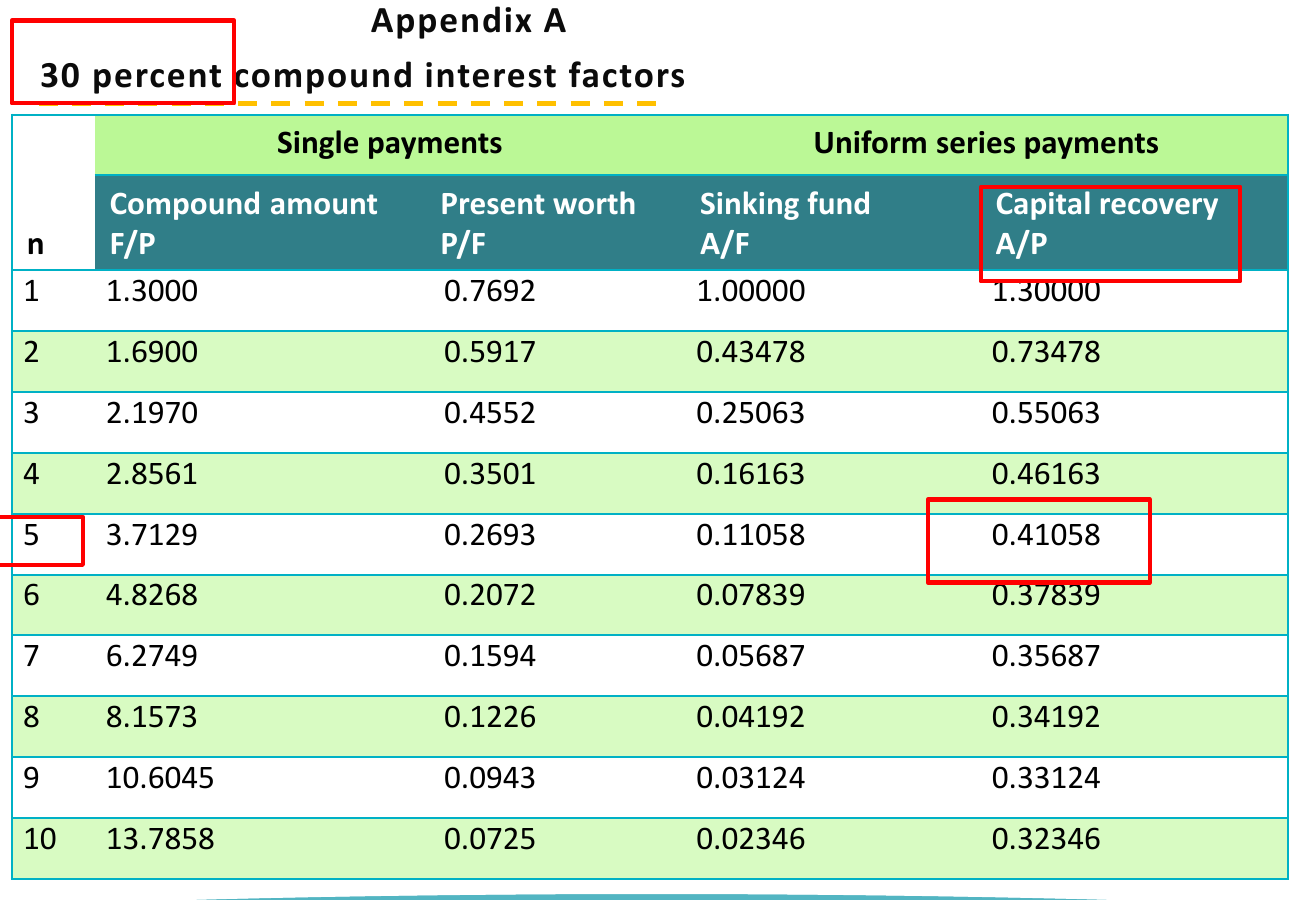
The lecture gives tables of interest factors for each rate (Appendix A). The two factors you use most are:
- Capital recovery changes a present value into an equal annual value
- Sinking fund changes a future value (such as a salvage value) into an equal annual value
How it works
- The company selects a Minimum Attractive Rate of Return (MARR). Values of 20 to 50 percent are normal for robot projects
- Use the interest factors at to change each cash flow into an annual value
- Add all the annual values to get the EUAC
Decision rule:
- means the actual rate of return is more than the MARR, so the project is good
- means the project is not attractive
Example 2
Use the data from Example 1 of the payback method, with and a service life of 5 years.
- IC=\100{,}000$
- C=\20{,}000$ per year
- R=\65{,}000$ per year
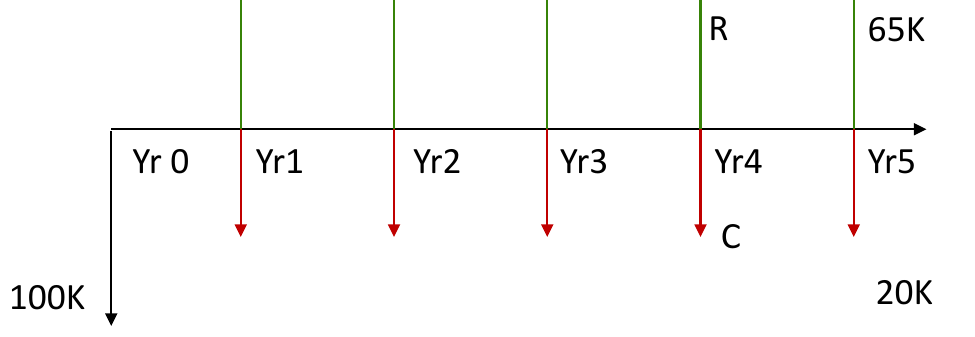
The annual cost and revenue are already uniform annual values. Only the investment must be changed with the capital recovery factor. From the 30 percent table, .
The EUAC is positive, so the robot project is a good investment.