Source
Adapted from my own handwritten and hand-typed notes from Year 1 to Year 3 of my EEE degree
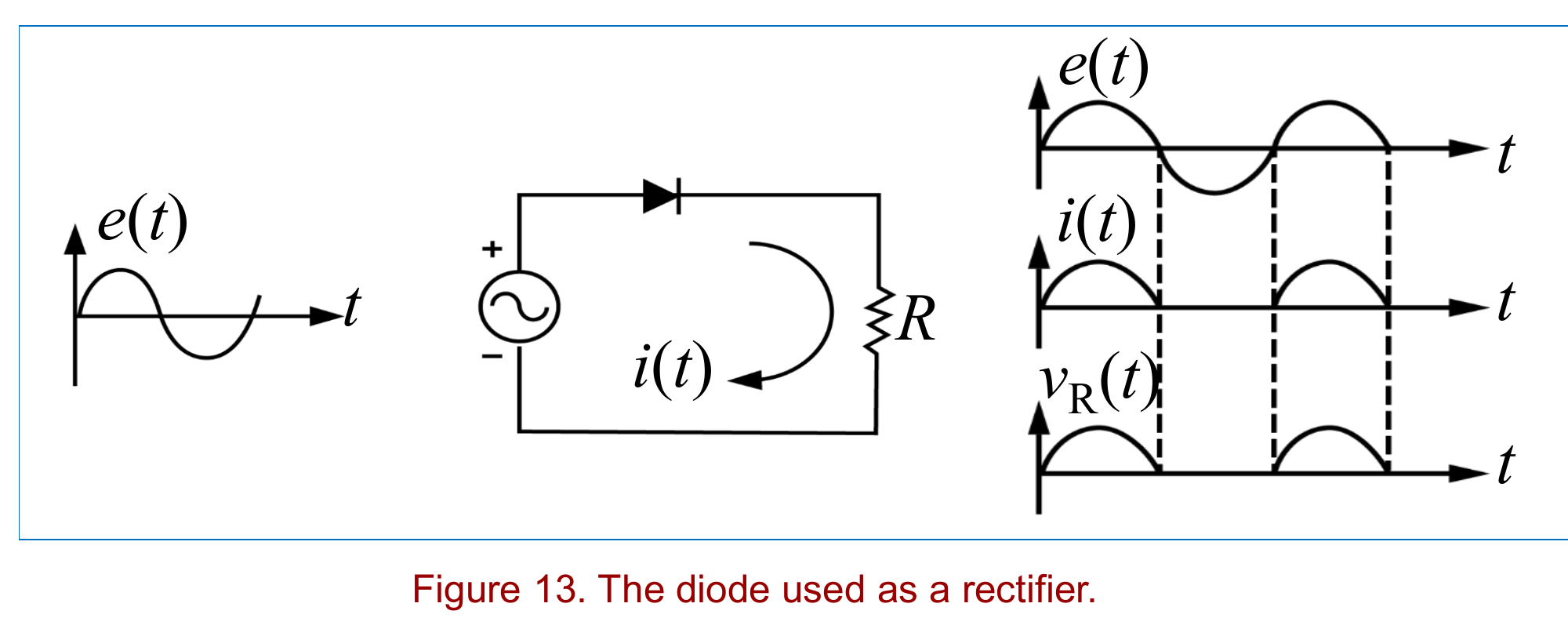
A rectifier lets current flow in one direction only. It is the first stage of a DC power supply, which turns an AC sine into a steady DC level.
Half-Wave Rectifier
One diode in series with the load. Current flows only during the positive half-cycle, so the load sees half sine pulses.
Capacitor Filter
The pulsing waveform still has large AC components. A capacitor across the output gives them a low-impedance path to ground:
- with no load, charges to the peak and stays there
- with a load , charges near each peak and discharges through in between
- the output is a DC level with a ripple voltage on top
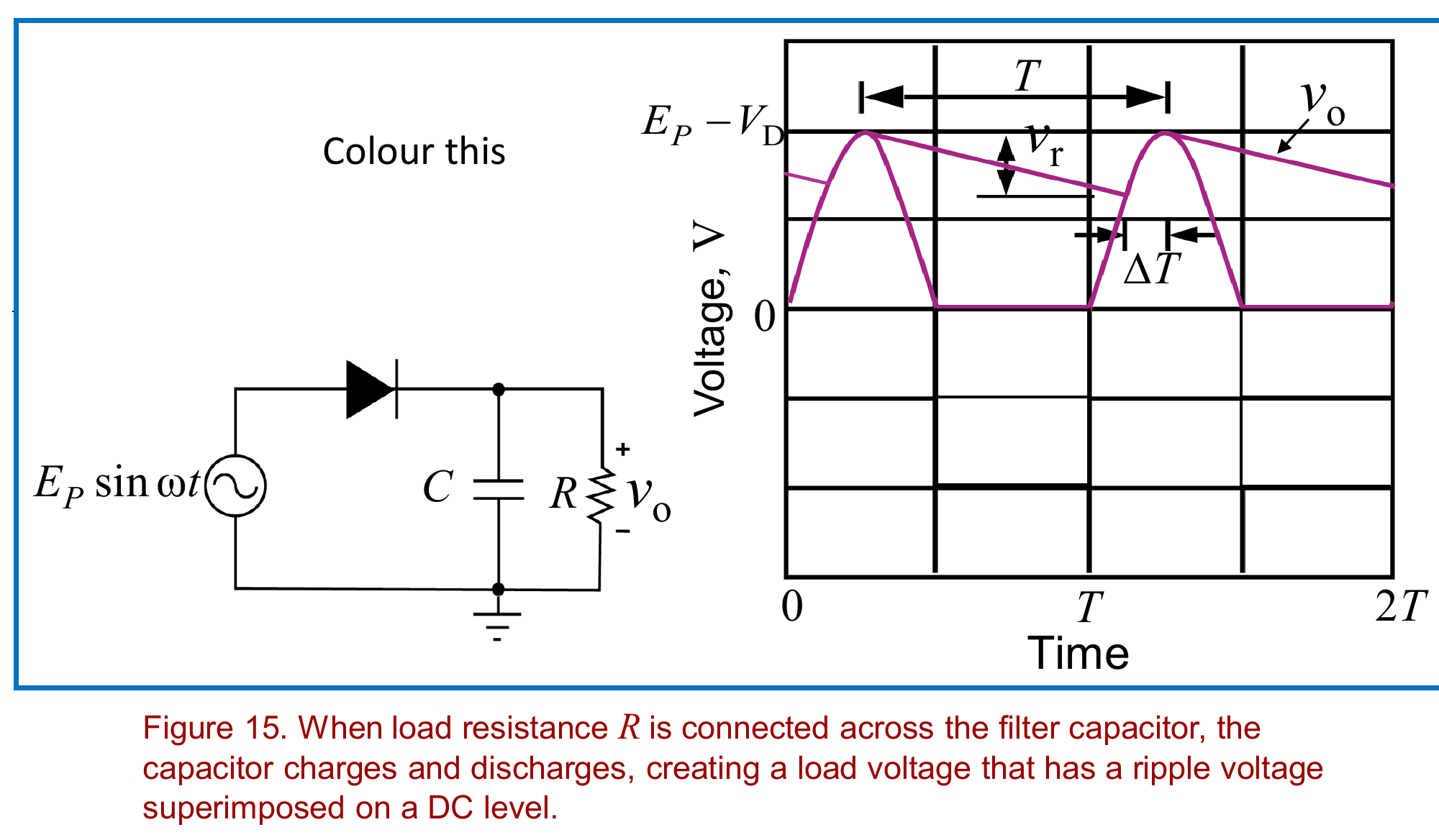
A common estimate when the ripple is small is for half-wave, since the capacitor discharges for nearly a full period .
Full-Wave Bridge Rectifier
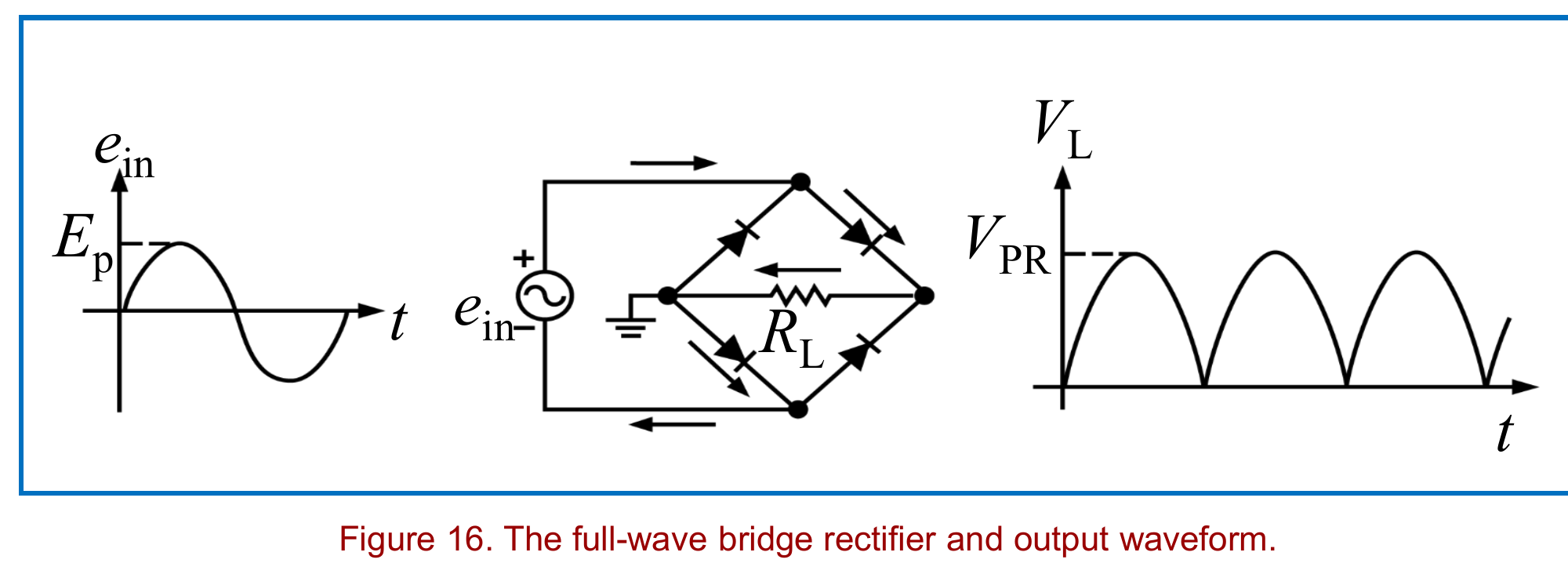
Four diodes steer current through the load in the same direction on both half-cycles:
- positive half-cycle: one pair of opposite diodes conducts
- negative half-cycle: the other pair conducts
- two diodes are always in series, so the peak load voltage is V
Filtered Full-Wave Output
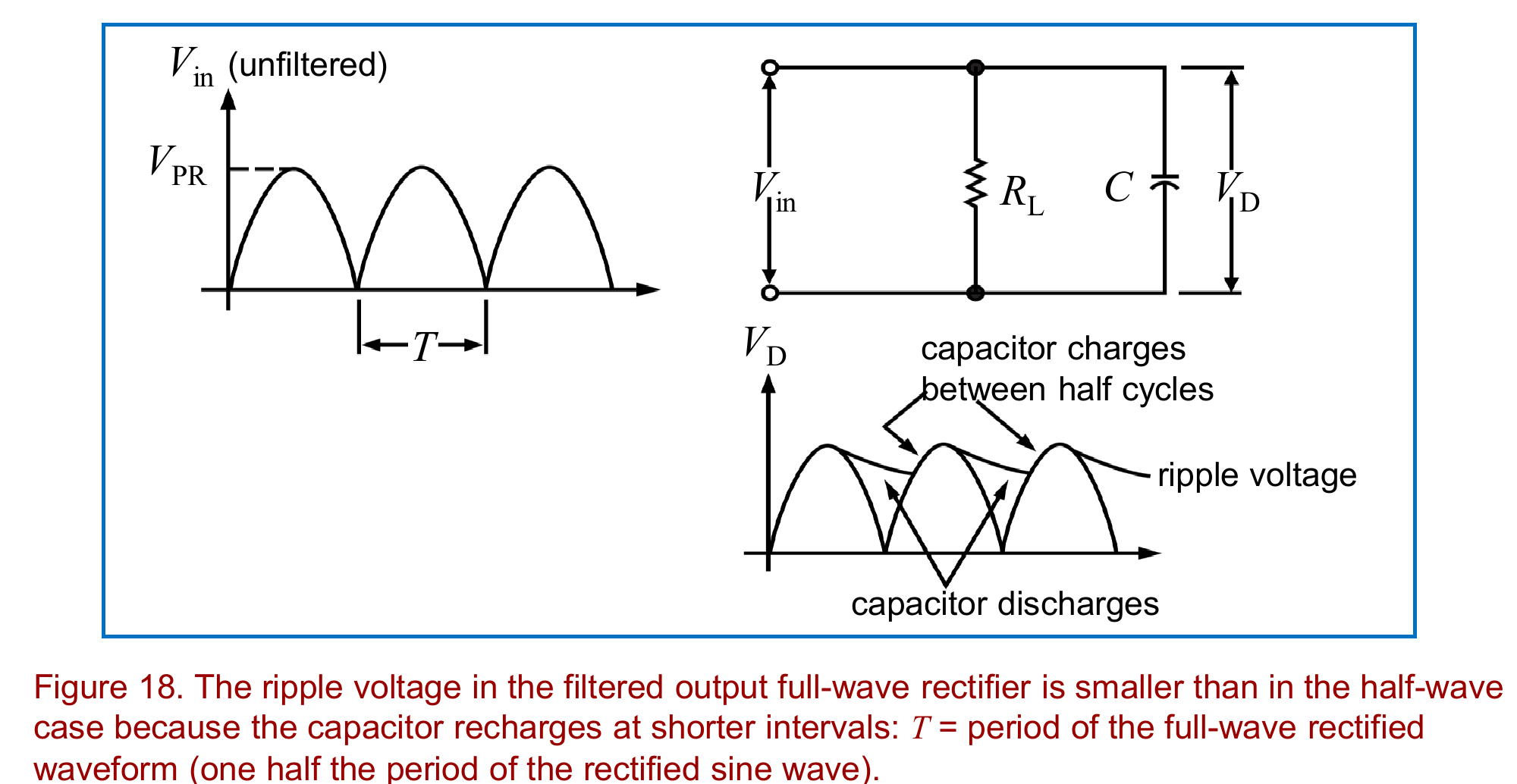
The rectified waveform repeats every half period of the sine, so the capacitor is recharged twice as often. The ripple is roughly halved compared with half-wave, .
Diodes plus op-amps give a rectifier with no 0.7 V loss, see Absolute Value Circuit.