Source
Adapted from my own handwritten and hand-typed notes from Year 1 to Year 3 of my EEE degree
Non-Inverting Gain Amplifier
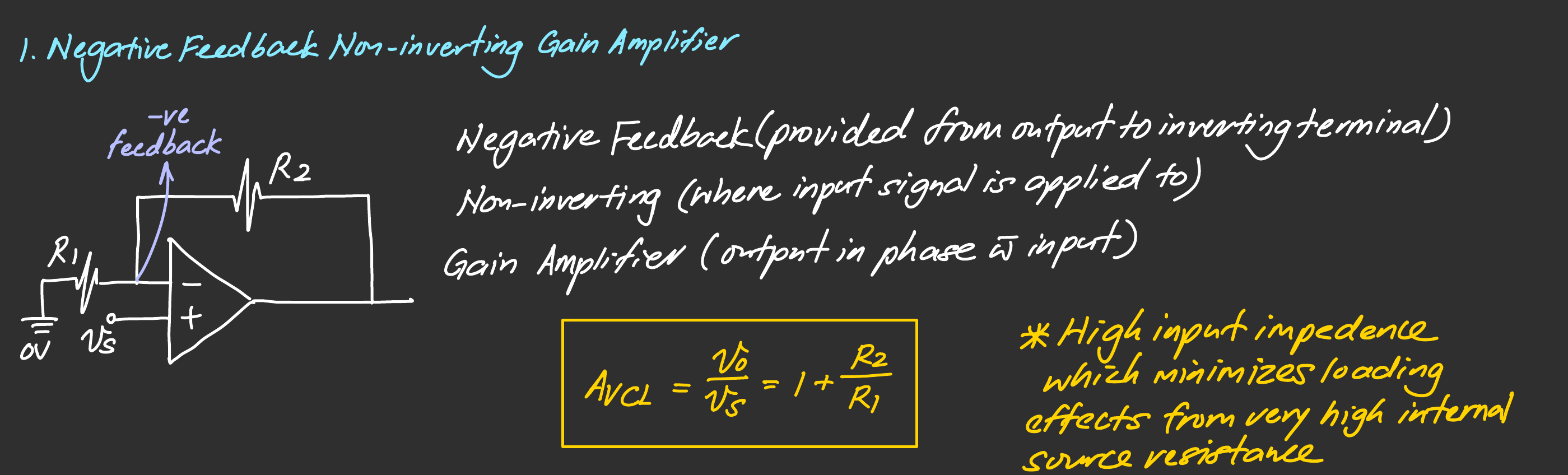
Gain Derivation
Why holds here:
- the feedback goes to the inverting input (negative feedback)
- the op-amp is ideal,
- the output stays inside
Input and Output Resistance
Results:
- since
- for an ideal op-amp
Rule
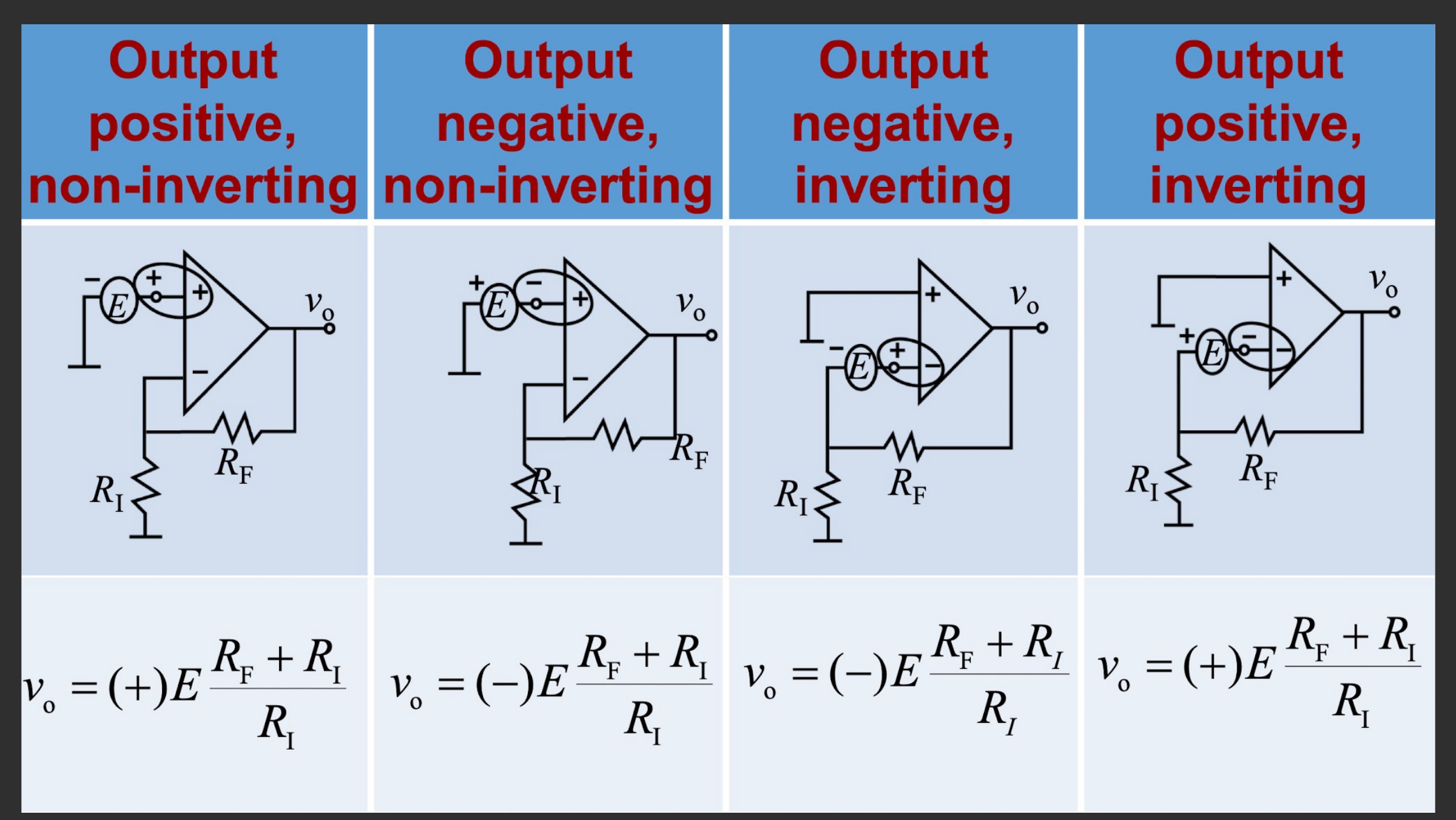
Any voltage appearing directly on either input of the op-amp is multiplied by the non-inverting gain . The sign of the output follows the polarity of the source and which input it sits on.
Non-Inverting Polarity Table
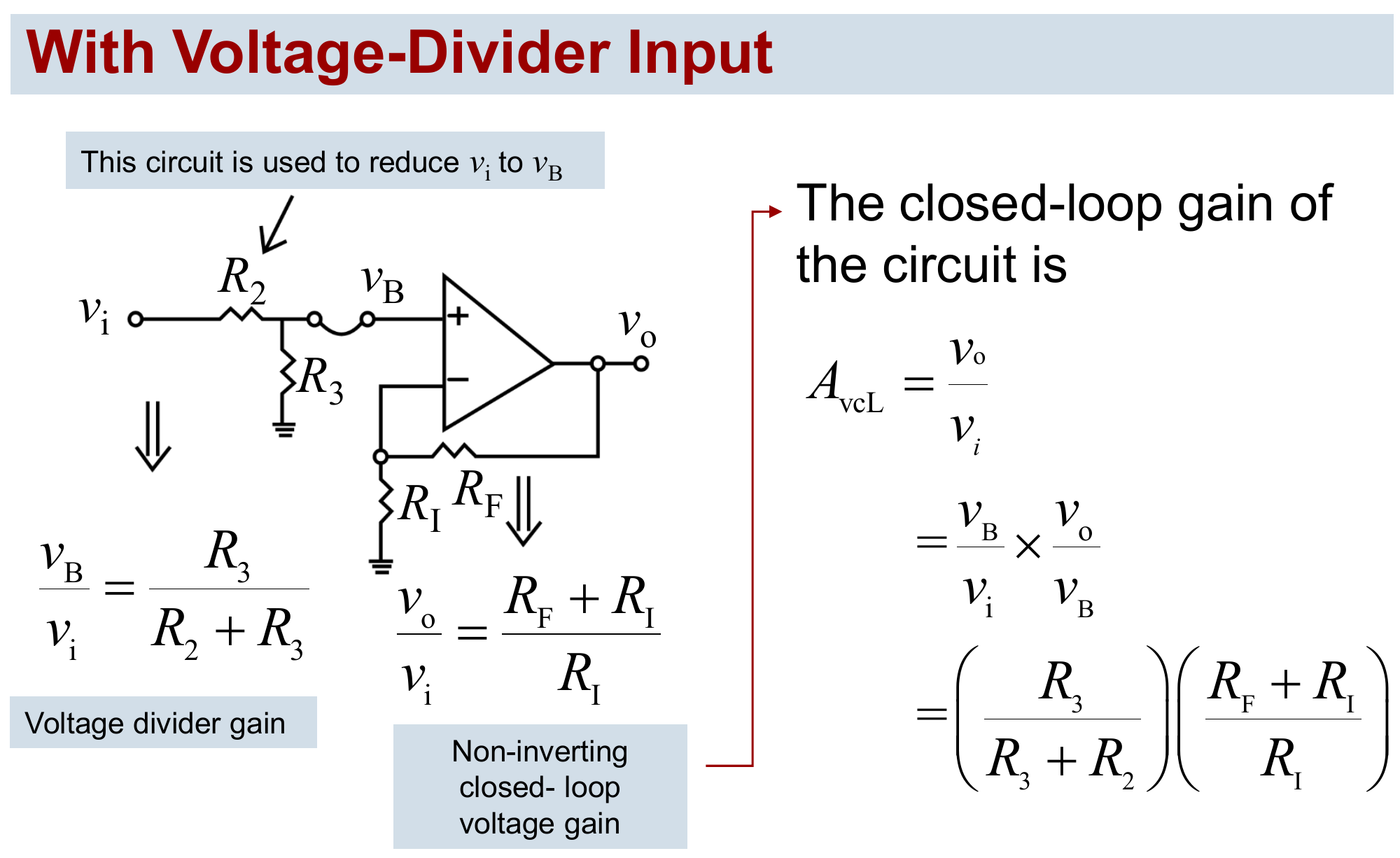
Voltage-Divider Input
A divider , in front of shrinks the signal first, then the stage amplifies:
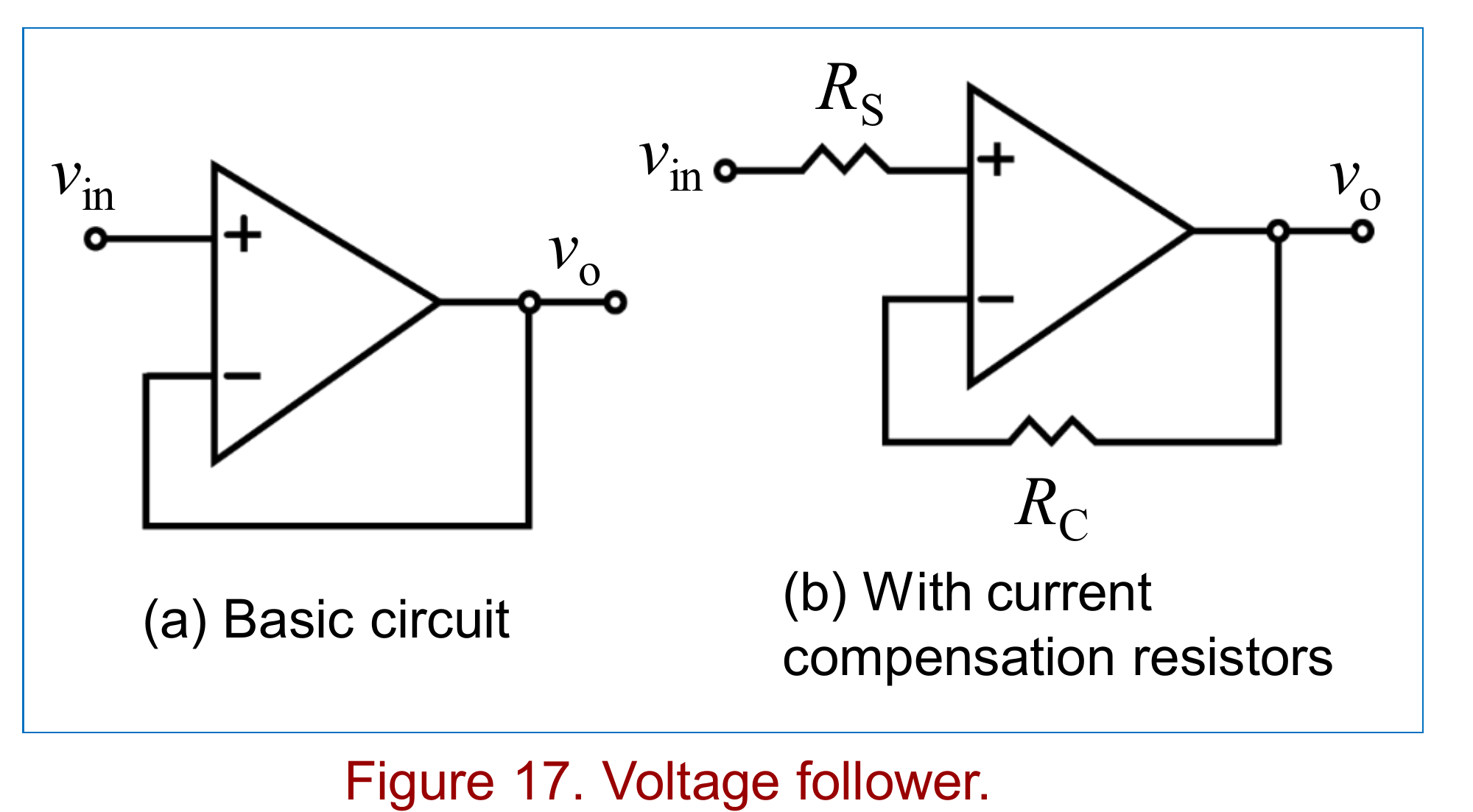
Unity Gain Buffer
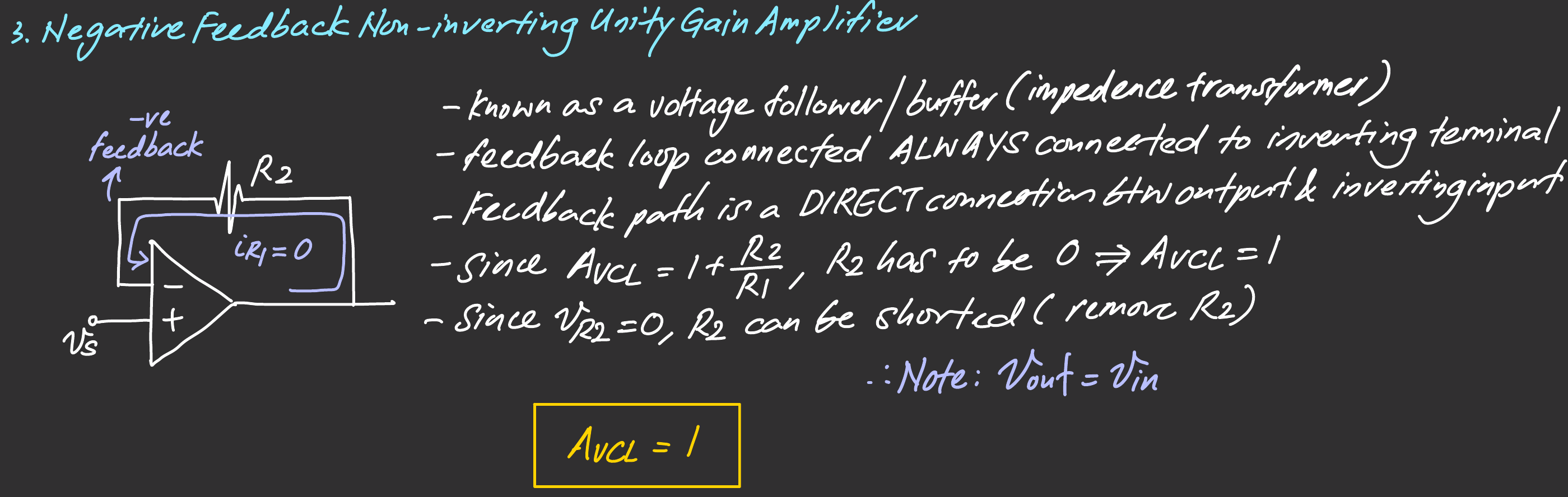
Why it works as an impedance transformer:
- output resistance is nearly zero, so the load voltage stays equal to whatever is
- without the buffer, a source driving directly gives , which depends on both resistors
With bias current compensation resistors ( at the input, in the feedback path), , so equal and cancel matched bias currents.
Worked Example: Currents
V on , kΩ, kΩ, kΩ:
- gain , so V
- mA through and
- mA, so the op-amp sources mA from the V supply
Putting one signal on each input gives the Scaling Subtractor.