Introduction
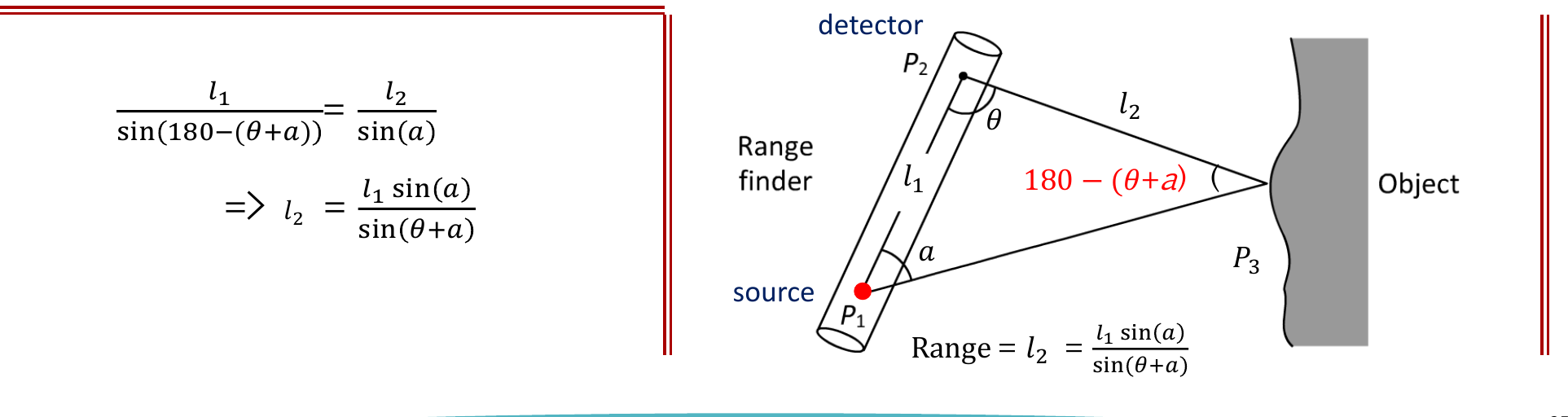
Triangulation measures range with geometry. It is one of the two principles of Range Sensing.
How it works
- a narrow beam of light lights up an object and sweeps over its surface
- the sweep is in the plane made by the object, the detector and the source
- the detector is at a known distance from the source, and it looks at a small part of the surface
- when the detector sees the light spot, you can calculate the distance to that spot from the geometry
This gives one point measurement at a time.
Key equations
The source is at , the detector is at and the light spot on the object is at .
- is the known distance from the source to the detector
- is the distance from the detector to the object, which is the range
- is the angle at the source, between and the light beam
- is the angle at the detector, between and the line of sight to the spot
The angle at the object is . From the sine rule: