Introduction
Tactile sensing is the ability to detect an object and recognise its shape. For this, the sensor must have many sensing points. Tactile sensors are a type of external state sensor in Robotic Sensors.
- commercial tactile sensors are flat pads
- the sensor detects the force when an object is pushed against it
- it can recognise the shape of an object or find its orientation
- they are often installed on grippers or fingers
Photo detector tactile sensors
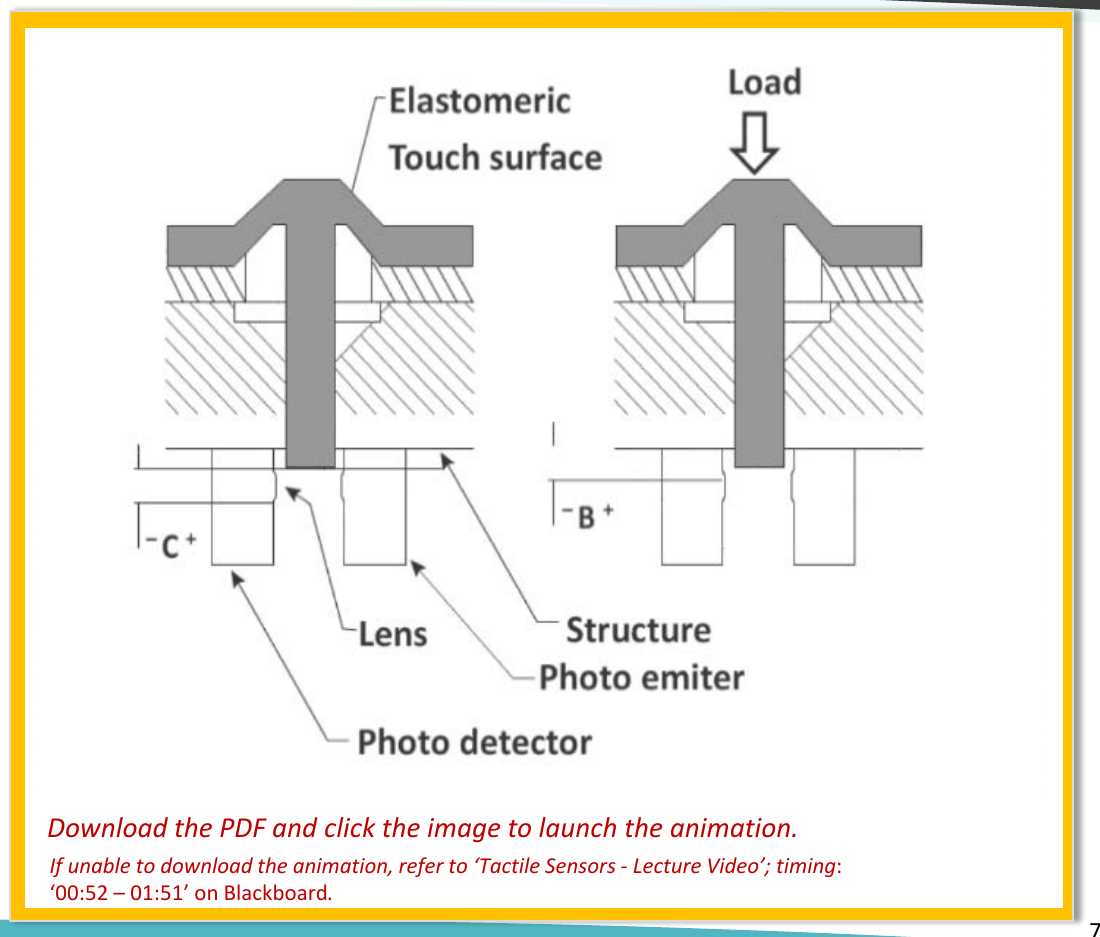
- a plastic pin is connected to an elastomeric (rubber like) pad
- the end of the pin blocks part of a light beam between a photo emitter and a photo detector
- when a force is applied, the pin moves in proportion to the force and blocks more of the light
- the sensor is a grid (array) of these cells, so it can sense the pressure at many points
VLSI tactile sensors
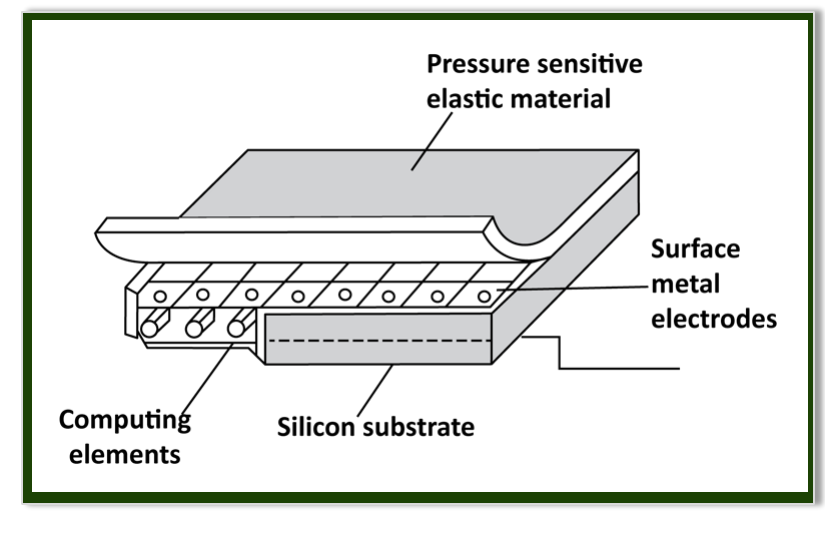
- the sensor is made from a VLSI wafer
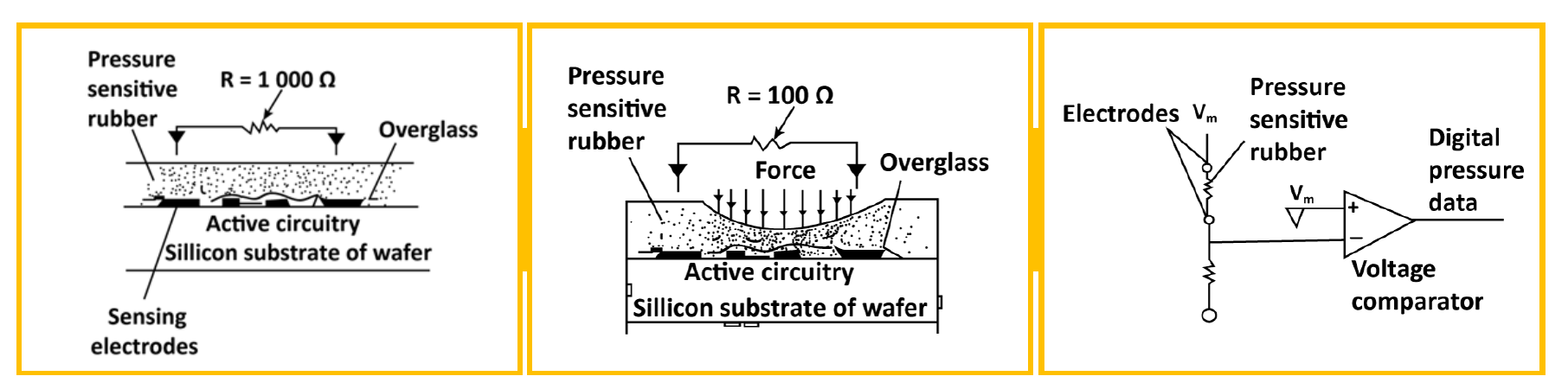
- pressure sensitive conductive rubber is laid over an array of sensing electrodes
How it works:
- the rubber makes a resistive path between the electrodes in each cell of the array
- when pressure is applied, the rubber compresses and its resistance decreases, for example from 1000 to 100
- after a threshold pressure, current can flow between the electrodes and the rubber
- a voltage comparator changes the electrode voltage into digital pressure data