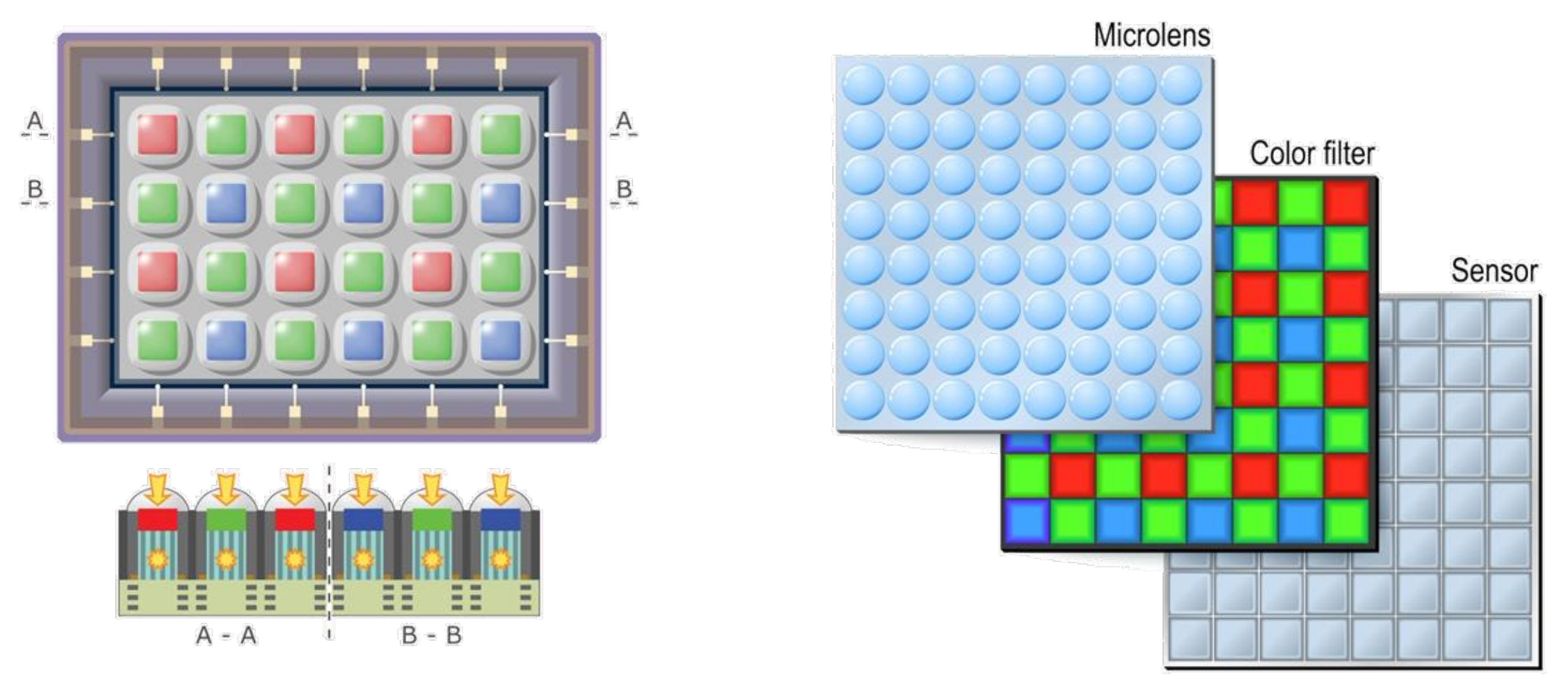
- sensors in Digital Camera is discrete and in a grid as shown above
- the world around us is continuous
- digital images are discrete samples of the real world
- every digital image begins with a sampling process that converts the continuous visual world into discrete pixels
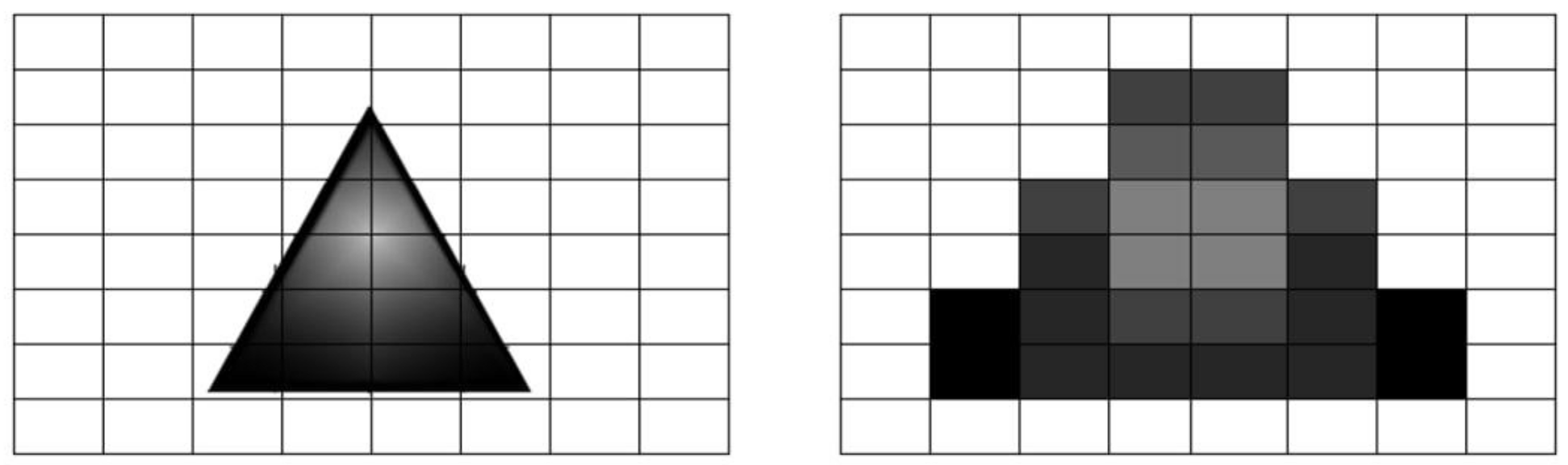
- the above image shows the results of image sampling and quantization
- if we have smaller sampling intervals, we will have samples leading to a higher spatial resolution
Image Resolution
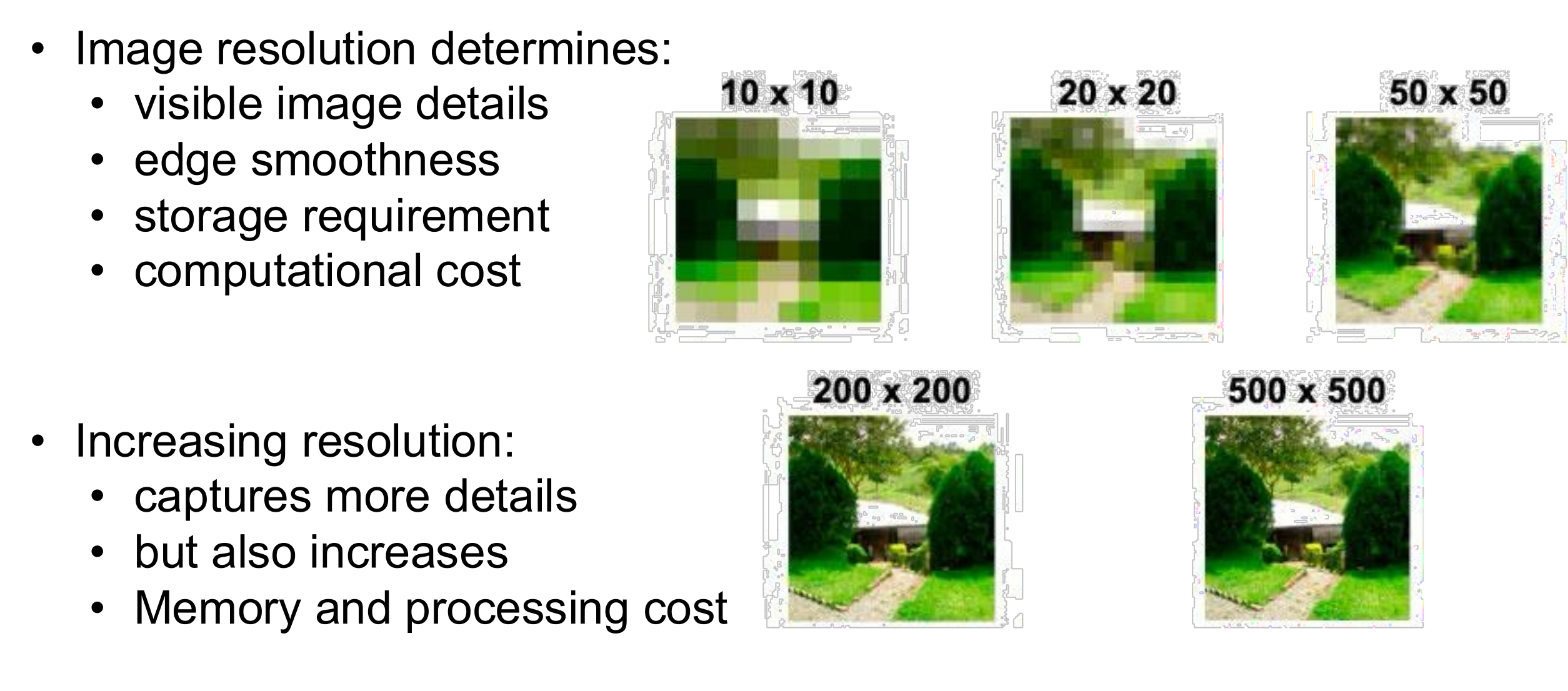
Sampling Frequency
- sampling frequency describes how densly the image is sampled
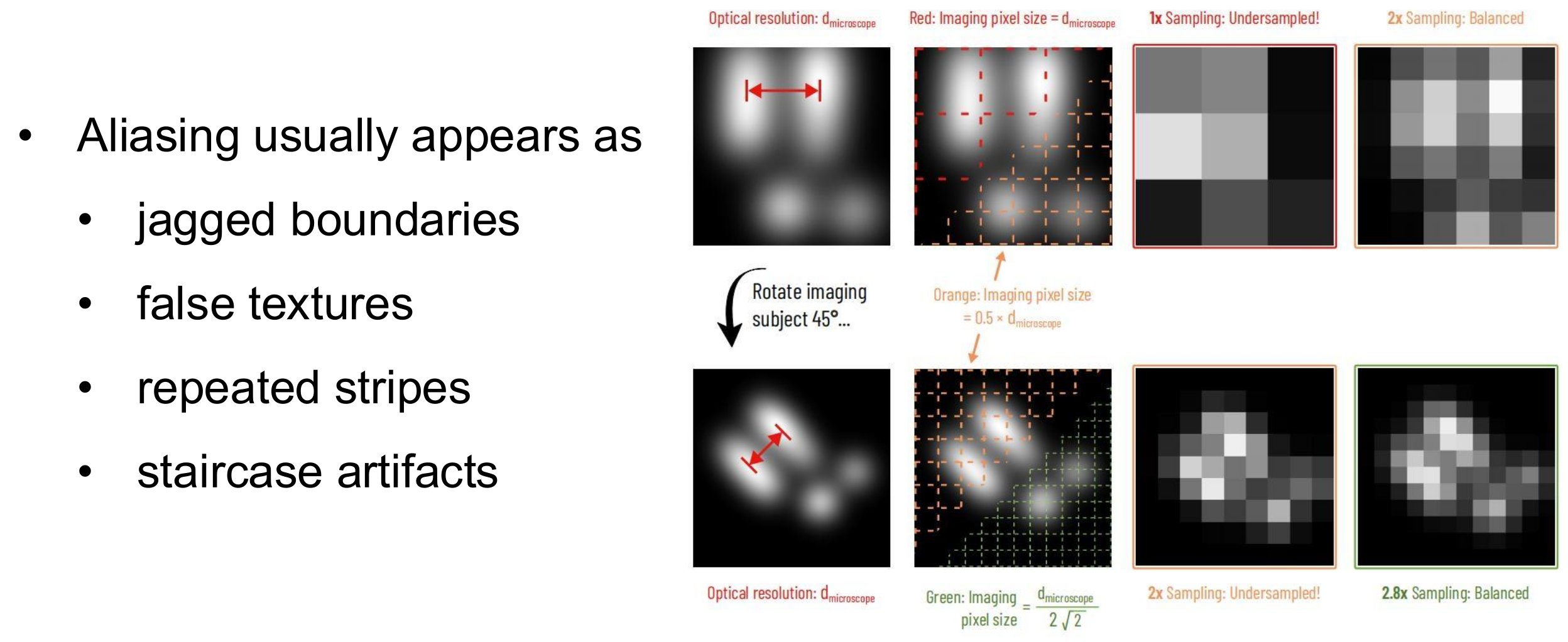
- high sampling frequency preserves more image details with less aliasing
Aliasing
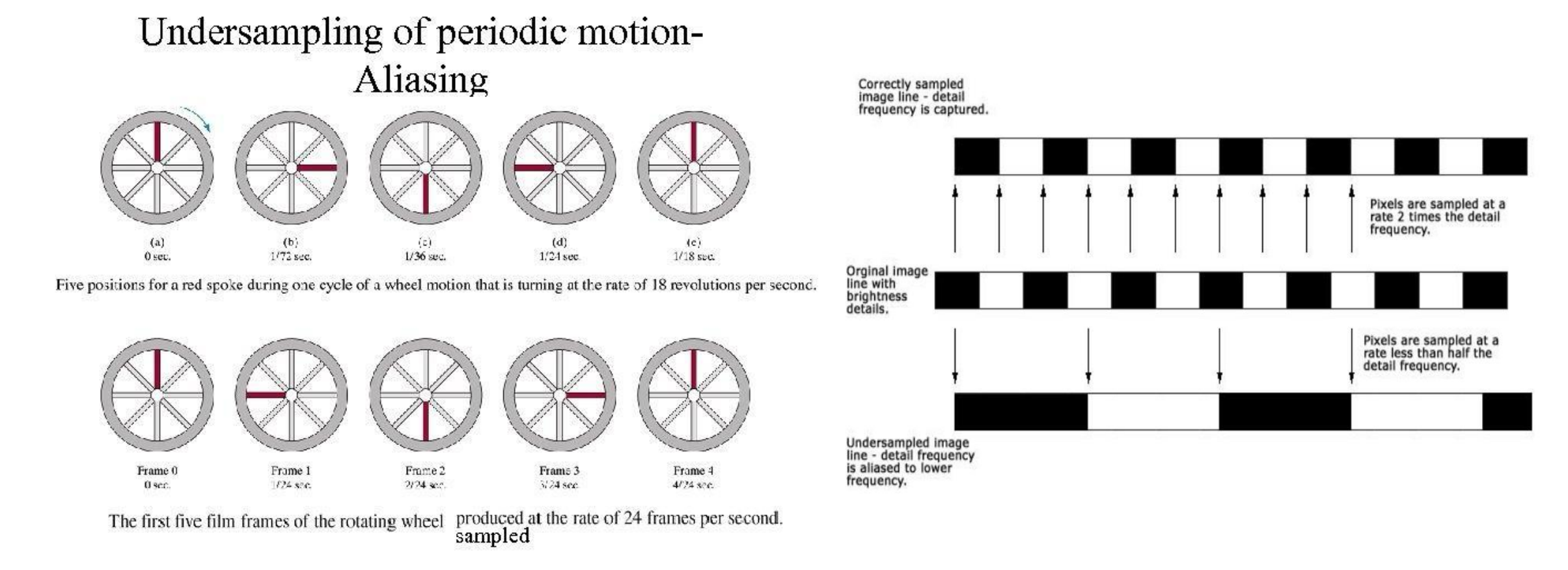
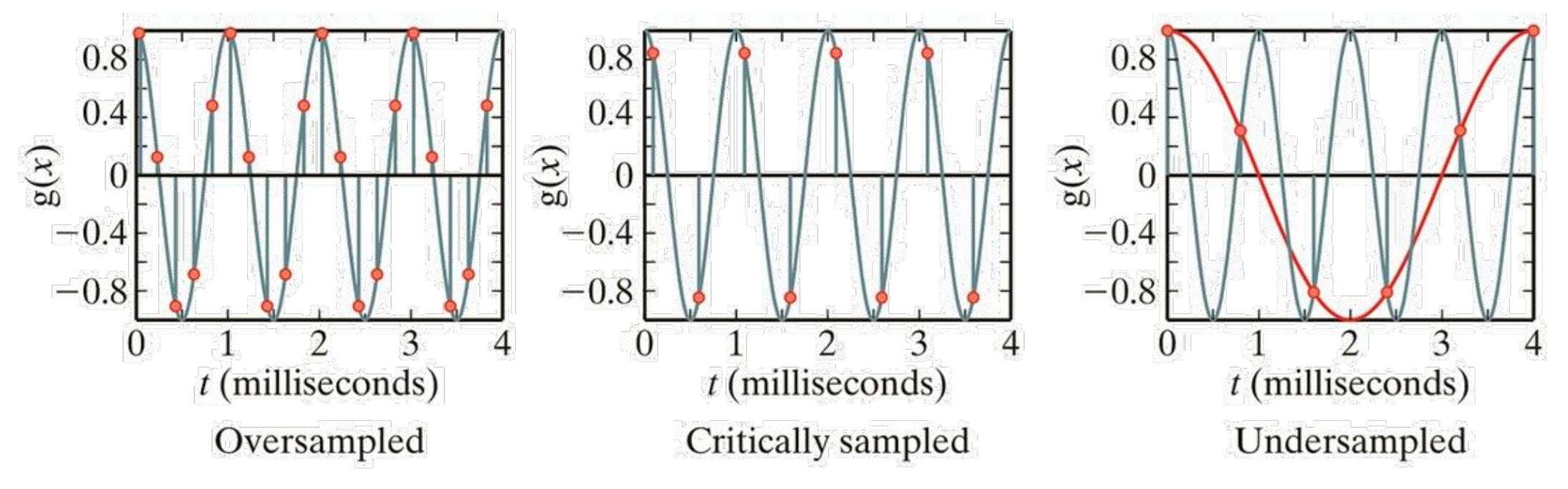
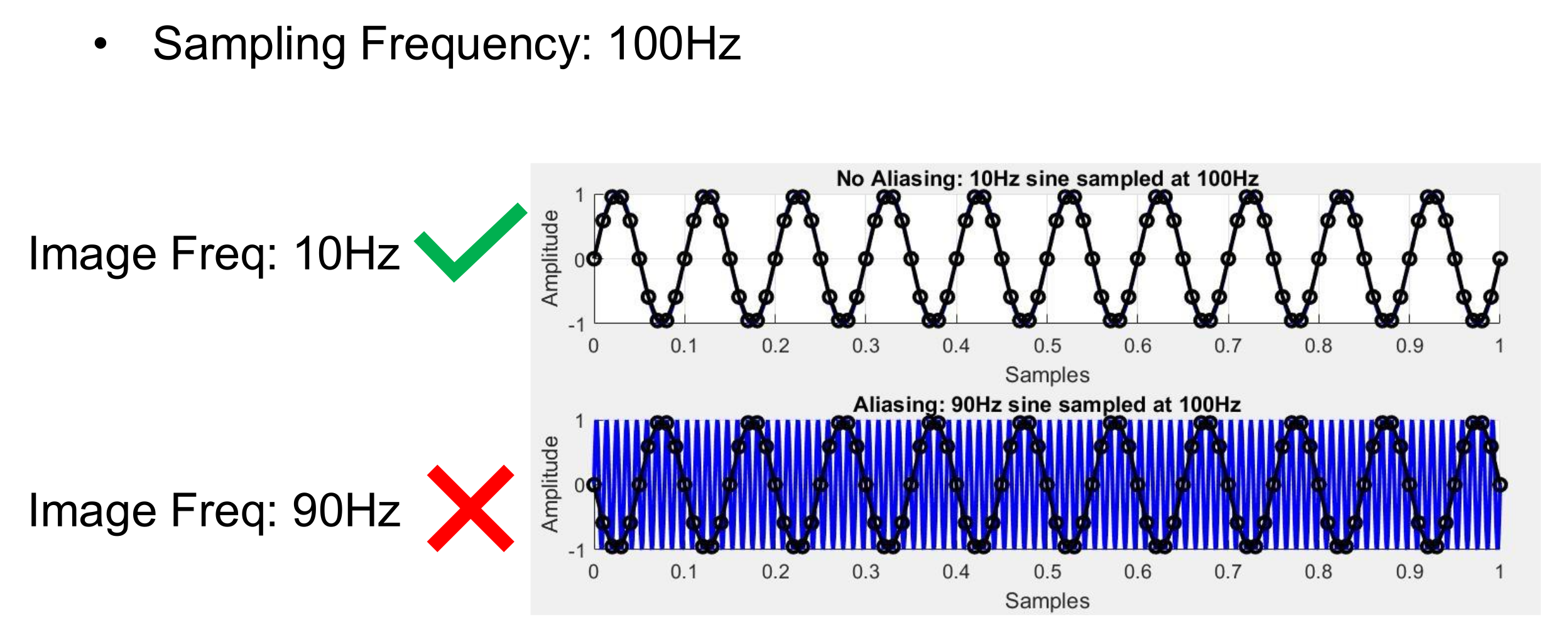
Aliasing occurs when the sampling frequency is lower than the signal frequency.
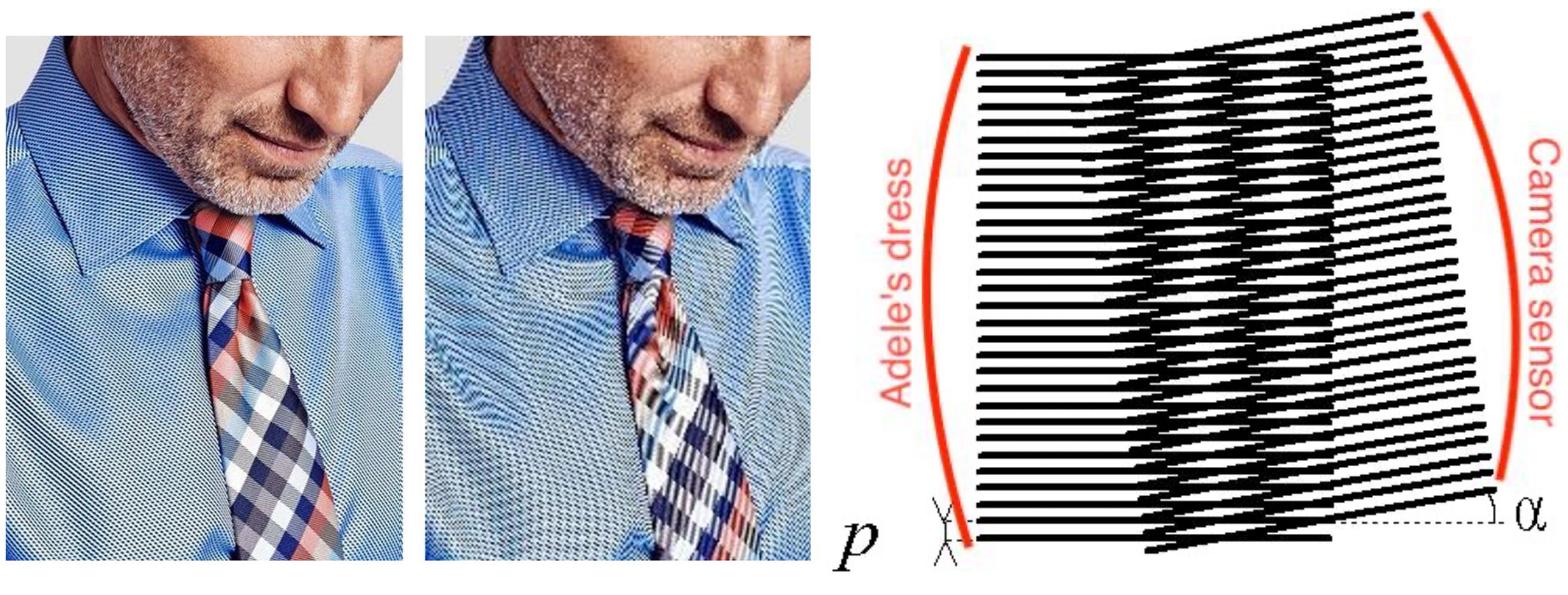
Nyquist Sampling Theorem
To reconstruct a signal correctly (from digital back to contiuous), the sampling frequency must be at least twice its highest frequency.
Anti-Aliasing
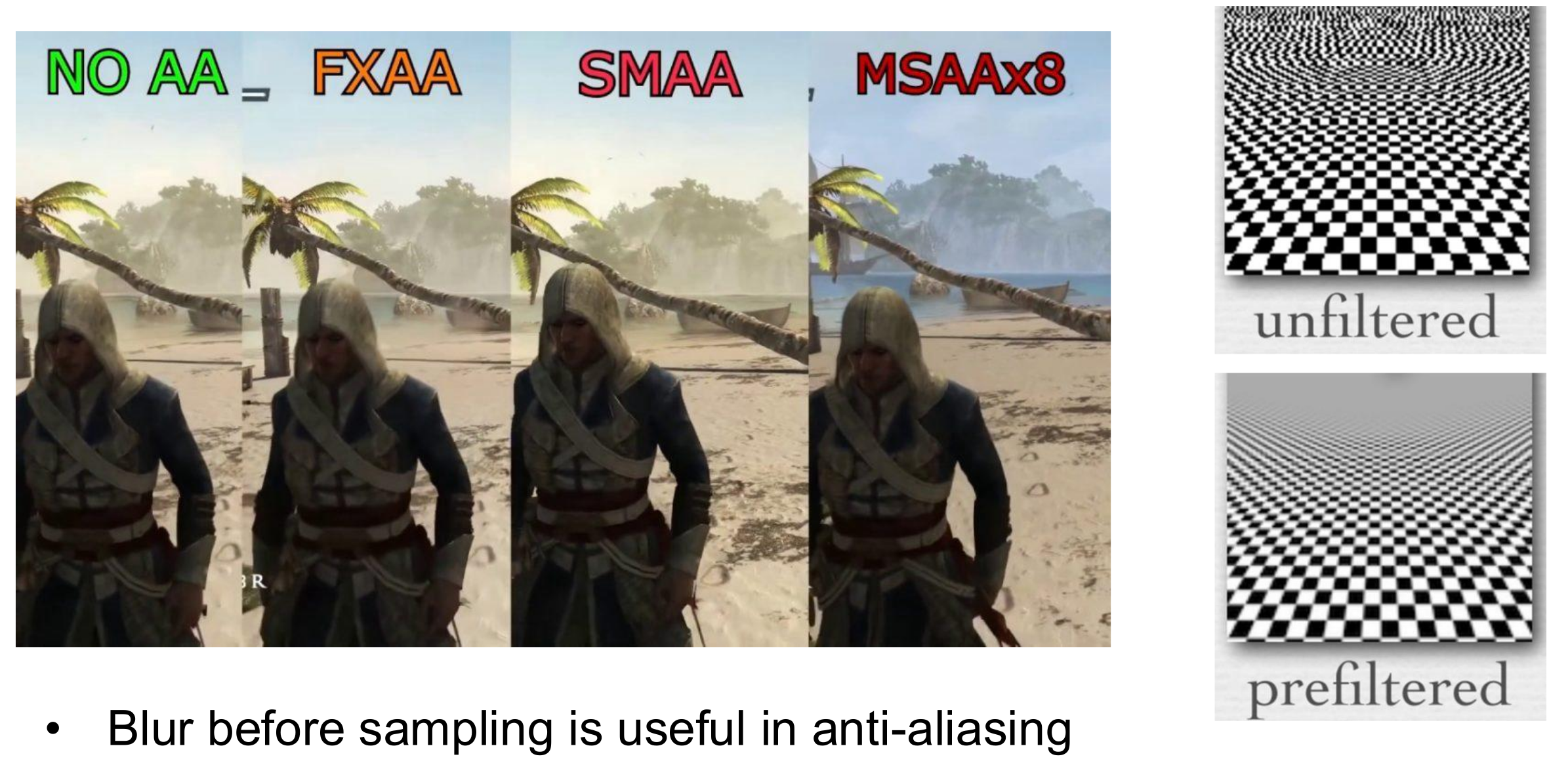
Sampling Pipeline
graph TD
A[Continuous Image] --> B[Low Pass Filter used to remove High frequencies] --> C[Sampling] --> D[Digital Image]
Image Interpolation
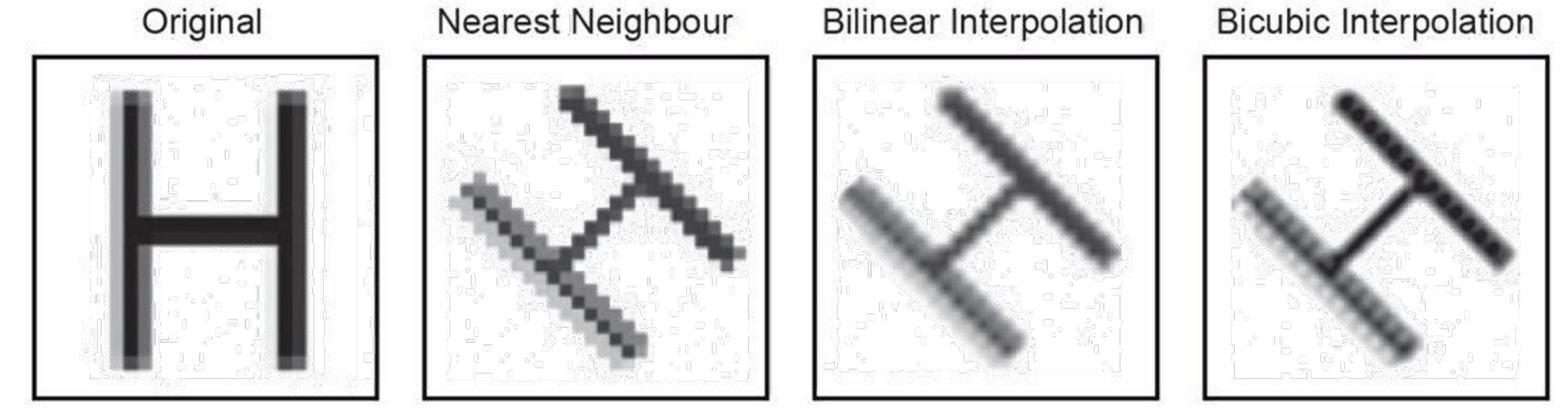
Interpolation estimates unknown pixels using existing neighbouring pixels.
| Method | Neighborhood Size | Visual Quality | Computational Speed | Common Artifacts |
|---|---|---|---|---|
| Nearest Neighbor | (1 pixel) | Lowest | Fastest | Blocky, jagged edges (pixelation) |
| Bilinear | (4 pixels) | Moderate | Fast | Slight blurriness / soft edges |
| Bicubic | (16 pixels) | High | Moderate | Minor haloing |
| Lanczos | or (36 to 64 pixels) | Highest | Slowest | Slight ringing near sharp contrast edges |
Nearest Neighbor: Copies the value of the single closest pixel. It requires minimal computation but creates severe "staircase" or pixelated artifacts when upscaling.
Bilinear Interpolation: Calculates a weighted average of the closest neighboring pixels using linear interpolation in both horizontal and vertical directions. It eliminates blocky pixels but introduces a soft blur.
Bicubic Interpolation: Uses a grid ( surrounding pixels) fitted to cubic polynomials. It preserves sharper edges and smoother gradients than bilinear interpolation at the cost of higher processing time.
Lanczos Interpolation: Uses a sinc-based windowed filter over a larger neighborhood ( or ). It delivers the sharpest detail preservation and highest image fidelity, making it the preferred choice for high-quality image resizing.