Source
Adapted from my own handwritten and hand-typed notes from Year 1 to Year 3 of my EEE degree
Problem
Design a 3-bit synchronous counter that follows the Gray code sequence, where only one bit changes per step:
This is a direct use of the method in Synchronous FSM Design, with no inputs: the next state depends only on the present state.
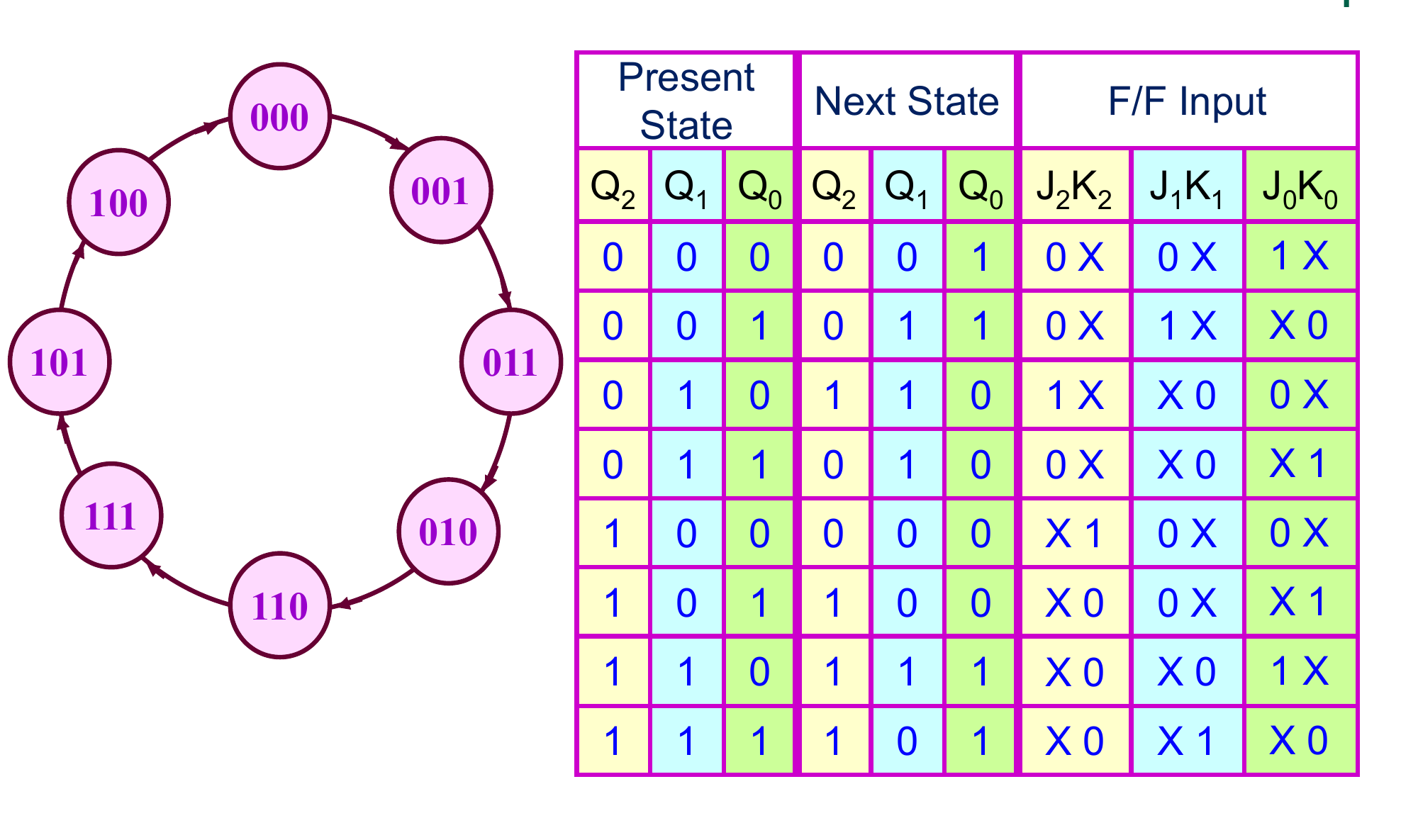
State Table With JK Excitation
Using the JK excitation table (: 0x, : 1x, : x1, : x0):
K-Maps and Equations
Plot each J and K on a 3-variable K-map of and group 1s with the x entries:
Quick check: from 010, so sets, holds () and holds (), giving 110 as required.
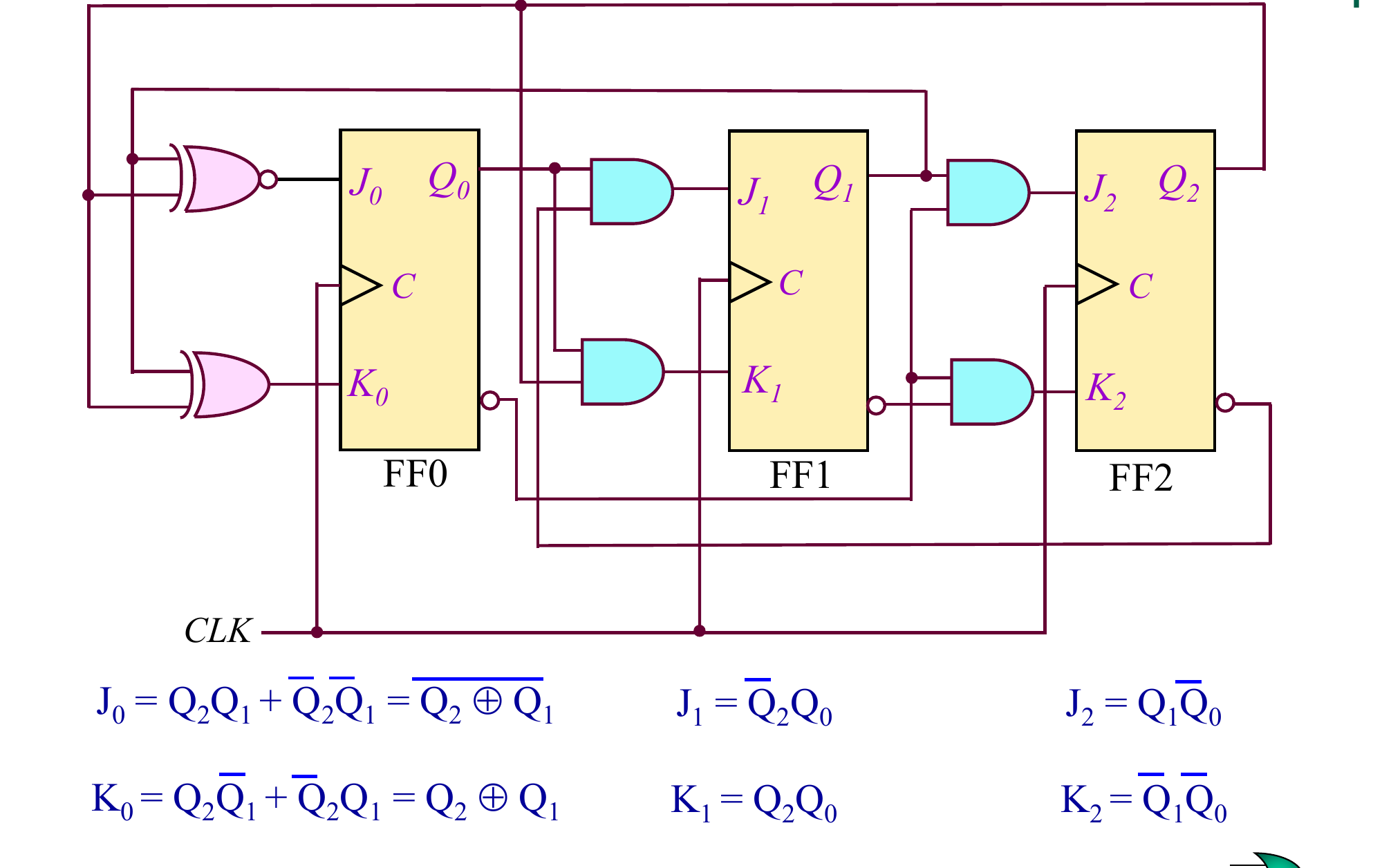
Circuit
General Method for Any Counter Sequence
Steps:
- list present state and next state for every count
- add the flip-flop inputs from the excitation table
- treat unused codes as don't-cares
- minimise each input with a K-map and draw the circuit
- check that unused states return to the main sequence